Nouriel Roubini
Keynote Speaker: Macroeconomist & Professor Emeritus at NYU's Stern School of Business; Predictor of 2008 Financial Crisis
-
Travels From:
-
Speaking Fee:
-
Categories:
Nouriel Roubini Biography
Dr. Nouriel Roubini is one of the world’s most influential economists and thought leaders, captivating audiences with his sharp insights and unrivaled ability to forecast global trends.
A celebrated speaker, educator, advisor, and portfolio manager, he combines deep expertise with first-hand experience gained through extensive global travel and high-level discussions with the world’s most powerful financial and political leaders. Recognized by Time magazine as one of the “Top 100 Scientists and Thinkers” shaping our world, Dr. Roubini is best known for his early and accurate prediction of the 2008 global financial crisis, earning him a reputation as a rare voice of foresight in uncertain times.
Dynamic and engaging on stage, Dr. Roubini delivers presentations that are both highly informative and compelling, making complex economic issues accessible to audiences worldwide. His commentary is frequently featured on leading business networks, and he has been profiled by premier publications such as The New York Times Magazine and The Financial Times.
When organizations seek clarity, perspective, and actionable intelligence on the global economy, they turn to Dr. Roubini.
Contact a speaker booking agent to check availability on Nouriel Roubini and other top speakers and celebrities.
Nouriel Roubini Speaking Topics
AI Leading to Secular Boom and Which Potential Risks
The Technologies and Industries of the Future and Their Impact on Growth: AI/ML, semiconductors, robotics and automaton, bio-medical research, quantum computing, defense tech space exploration and exploitation, ag-tech, renewable energy, fusion energy, fin-tech and blockchain, new material science, mobility revolution, new cryptography. Winners and losers within countries and across countries. Which impact on Productivity and Potential Growth.
Impact of AI and Tech Innovation on Jobs and the Labor Markets: New Jobs of the Future or Mass Technological Unemployment
Is US Exceptionalism Over or Enhanced by the US Leadership in the Technologies of the Future?
Global Climate Change Economics: What Feasible Options?
US and Global Macroeconomic Outlook 2025: Goldilocks, or Recession or No Landing?
US Economic Outlook Under Trump: Which Upside or Downside Risks?
Outlook for the Fed, Other Central Banks and Central Bank Independence? Who Will Be the Next Fed Chair and How Dovish His Policies?
Is the US Dollar’s Exorbitant Privilege Over and De-Dollarization a Material Risk?
Will the US Dollar Weaken Over Time and Lose Its Global Reserve Currency Status?
Markets and Asset Prices Ahead: New Equity Market Highs or a Bursting Bubble?
Is AI in a Bubble or Some Frothiness or on the Way to Further Boom as AGI is Ahead of Us?
Economic and Market Impacts of Geopolitical Risks (Middle East including Israel-Iran, Russia-Ukraine, Venezuela, US- China)
Financial and Debt Crises Ahead and Where? Private and Public Debts Surging and the Risk of Fiscal Dominance
Will Large Private and Public Debt be Monetized Leading to Fiscal Dominance and Debasement of Fiat Currencies?
Higher Long Bond Yields as High Debt/Deficits Lead to Higher Financing Costs or Lower Yields as Economic Weakness, Risk-Off and Financial Repression Prevails?
Secular Stagflation Ahead Or Secular Boom?
Megathreats: How to Address them and Resolve Them?
Outlook for Crypto, Blockchain and Digital/Tokenized Assets
Future of Money and Payment Sustems (Domestic and Cross-Border): CBDCs, Stablecoins, Tokenized Deposits or Crypto-Currencies ?
Future of Finance: Traditional Finance Revamped, Fin Tech or Decentralized Finance?
Mother of All Debt Crises Ahead? In Which Countries and Sectors?
Risks of Trade Wars, Deglobalization, Slobalization, De-Risking and De-Coupling
US-China Scenarios: Cooperation, Confrontation/Collision Course or Managed Strategic Competition?
China’s Economic Outlook for 2026: Soft or Hard or Bumpy Landing?
Who Will Win the Race for AI and the Technologies of the Future: US, China or Both?
End of the Rule-Based International Order: Move to Spheres of Influence or Global Rivalries About Global Hegemony Between the US and China?
Which Outlook for EU and Eurozone: Greater Integration or Dis-Integration?
Japan: A Rising or Declining Sun? Economic and Market Outlook
Will India Become an Economic and Geo-Political Superpower?
What is the Future of the BRICS? More Integration or Shambolic Coalition With Divergent Interests?
Risks and Opportunities in Emerging Markets: Asia, Latin America, Middle East, Eastern Europe and Africa
Backlash Against Liberal Democracy and Rise of Populism: Causes and Policy Solutions
Utopian or Dystopian Future for the World as AI and Geopolitical Risks Emerge?
Outlook for oil, energy markets and the Middle East economies
Nouriel Roubini Videos


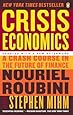
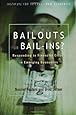
How do I book Nouriel Roubini to speak at my event?
Our experienced booking agents have successfully helped clients around the world secure speakers like Nouriel Roubini for speaking engagements, personal appearances, product endorsements, or corporate entertainment since 2002. Click the Check Schedule button above and complete the form on this page to check availability for Nouriel Roubini, or call our office at 1.855.383.8805 to discuss your upcoming event. One of our experienced agents will be happy to help you get speaking fee information and check availability for Nouriel Roubini or any other speaker of your choice.
How much does it cost to book Nouriel Roubini for a speaking engagement?
Speaking fees for Nouriel Roubini, or any other speakers and celebrities, are determined based on a number of factors and may change without notice. The estimated fees to book Nouriel Roubini are $50,000 - $100,000 for live events and $30,000 - $50,000 for virtual events. For the most current speaking fee to hire Nouriel Roubini, click the Check Schedule button above and complete the form on this page, or call our office at 1.855.383.8805 to speak directly with an experienced booking agent.
What topics does Nouriel Roubini speak about?
Nouriel Roubini is a keynote speaker and industry expert who speaks on a wide range of topics such as Business Authors, Economy, Entrepreneurship, Finance, Futurism, Professors, Geopolitics, World Affairs, Technology, Artificial Intelligence, Cryptocurrency and Blockchain.
Where does Nouriel Roubini travel from?
Nouriel Roubini generally travels from New York, NY, USA and can be booked for (private) corporate events, personal appearances, keynote speeches, or other performances.
Who is the agent for Nouriel Roubini?
AAE Speakers Bureau has successfully secured keynote speakers like Nouriel Roubini for clients worldwide since 2002. As a full-service speaker booking agency, we have access to virtually any speaker or celebrity in the world. Our agents are happy and able to submit an offer to the speaker or celebrity of your choice, letting you benefit from our reputation and long-standing relationships in the industry. Please click the Check Schedule button above and complete the form on this page including the details of your event, or call our office at 1.855.383.8805, and one of our agents will assist you to book Nouriel Roubini for your next private or corporate function.
What is a full-service speaker booking agency?
AAE Speakers Bureau is a full-service speaker booking agency, meaning we can completely manage the speaker’s or celebrity’s engagement with your organization from the time of booking your speaker through the event’s completion. We provide all of the services you need to host Nouriel Roubini or any other speaker of your choice, including offer negotiation, contractual assistance, accounting and billing, and event speaker travel and logistics services. When you book a speaker with us, we manage the process of hosting a speaker for you as an extension of your team. Our goal is to give our clients peace of mind and a best-in-class service experience when booking a speaker with us.
Why is AAE Speakers Bureau different from other booking agencies?
If you’re looking for the best speaker recommendations, paired with a top-notch customer service experience, you’re in the right place. At AAE Speakers Bureau, we exclusively represent the interests of our clients - professional organizations, companies, universities, and associations. We intentionally do not represent the speakers we feature or book. That is so we can present our clients with the broadest and best performing set of speaker options in the market today, and we can make these recommendations without any obligation to promote a specific speaker over another. This is why when our agents suggest a speaker for your event, you can be assured that they are of the highest quality with a history of proven success with our other clients.
Nouriel Roubini is a keynote speaker and industry expert who speaks on a wide range of topics including Business Authors, Economy and Entrepreneurship. The estimated speaking fee range to book Nouriel Roubini for live events is $50,000 - $100,000, and for virtual events $30,000 - $50,000. Nouriel Roubini generally travels from New York, NY, USA and can be booked for (private) corporate events, personal appearances, keynote speeches, or other performances. Similar motivational celebrity speakers are Ian Bremmer, Peter Zeihan and Joseph Stiglitz. Contact All American Speakers for ratings, reviews, videos and information on scheduling Nouriel Roubini for an upcoming event.
SPEAKING TOPICS
Nouriel Roubini Speaking Topics
-
Speaking Topics
AI Leading to Secular Boom and Which Potential Risks
The Technologies and Industries of the Future and Their Impact on Growth: AI/ML, semiconductors, robotics and automaton, bio-medical research, quantum computing, defense tech space exploration and exploitation, ag-tech, renewable energy, fusion energy, fin-tech and blockchain, new material science, mobility revolution, new cryptography. Winners and losers within countries and across countries. Which impact on Productivity and Potential Growth.
Impact of AI and Tech Innovation on Jobs and the Labor Markets: New Jobs of the Future or Mass Technological Unemployment
Is US Exceptionalism Over or Enhanced by the US Leadership in the Technologies of the Future?
Global Climate Change Economics: What Feasible Options?
US and Global Macroeconomic Outlook 2025: Goldilocks, or Recession or No Landing?
US Economic Outlook Under Trump: Which Upside or Downside Risks?
Outlook for the Fed, Other Central Banks and Central Bank Independence? Who Will Be the Next Fed Chair and How Dovish His Policies?
Is the US Dollar’s Exorbitant Privilege Over and De-Dollarization a Material Risk?
Will the US Dollar Weaken Over Time and Lose Its Global Reserve Currency Status?
Markets and Asset Prices Ahead: New Equity Market Highs or a Bursting Bubble?
Is AI in a Bubble or Some Frothiness or on the Way to Further Boom as AGI is Ahead of Us?
Economic and Market Impacts of Geopolitical Risks (Middle East including Israel-Iran, Russia-Ukraine, Venezuela, US- China)
Financial and Debt Crises Ahead and Where? Private and Public Debts Surging and the Risk of Fiscal Dominance
Will Large Private and Public Debt be Monetized Leading to Fiscal Dominance and Debasement of Fiat Currencies?
Higher Long Bond Yields as High Debt/Deficits Lead to Higher Financing Costs or Lower Yields as Economic Weakness, Risk-Off and Financial Repression Prevails?
Secular Stagflation Ahead Or Secular Boom?
Megathreats: How to Address them and Resolve Them?
Outlook for Crypto, Blockchain and Digital/Tokenized Assets
Future of Money and Payment Sustems (Domestic and Cross-Border): CBDCs, Stablecoins, Tokenized Deposits or Crypto-Currencies ?
Future of Finance: Traditional Finance Revamped, Fin Tech or Decentralized Finance?
Mother of All Debt Crises Ahead? In Which Countries and Sectors?
Risks of Trade Wars, Deglobalization, Slobalization, De-Risking and De-Coupling
US-China Scenarios: Cooperation, Confrontation/Collision Course or Managed Strategic Competition?
China’s Economic Outlook for 2026: Soft or Hard or Bumpy Landing?
Who Will Win the Race for AI and the Technologies of the Future: US, China or Both?
End of the Rule-Based International Order: Move to Spheres of Influence or Global Rivalries About Global Hegemony Between the US and China?
Which Outlook for EU and Eurozone: Greater Integration or Dis-Integration?
Japan: A Rising or Declining Sun? Economic and Market Outlook
Will India Become an Economic and Geo-Political Superpower?
What is the Future of the BRICS? More Integration or Shambolic Coalition With Divergent Interests?
Risks and Opportunities in Emerging Markets: Asia, Latin America, Middle East, Eastern Europe and Africa
Backlash Against Liberal Democracy and Rise of Populism: Causes and Policy Solutions
Utopian or Dystopian Future for the World as AI and Geopolitical Risks Emerge?
Outlook for oil, energy markets and the Middle East economies
VIDEO
Nouriel Roubini Videos

BOOKS
NEWS
Nouriel Roubini News
FAQS
-
How do I book Nouriel Roubini to speak at my event?
Our experienced booking agents have successfully helped clients around the world secure speakers like Nouriel Roubini for speaking engagements, personal appearances, product endorsements, or corporate entertainment since 2002. Click the Check Schedule button above and complete the form on this page to check availability for Nouriel Roubini, or call our office at 1.855.383.8805 to discuss your upcoming event. One of our experienced agents will be happy to help you get speaking fee information and check availability for Nouriel Roubini or any other speaker of your choice. -
How much does it cost to book Nouriel Roubini for a speaking engagement?
Speaking fees for Nouriel Roubini, or any other speakers and celebrities, are determined based on a number of factors and may change without notice. The estimated fees to book Nouriel Roubini are $50,000 - $100,000 for live events and $30,000 - $50,000 for virtual events. For the most current speaking fee to hire Nouriel Roubini, click the Check Schedule button above and complete the form on this page, or call our office at 1.855.383.8805 to speak directly with an experienced booking agent. -
What topics does Nouriel Roubini speak about?
Nouriel Roubini is a keynote speaker and industry expert who speaks on a wide range of topics such as Business Authors, Economy, Entrepreneurship, Finance, Futurism, Professors, Geopolitics, World Affairs, Technology, Artificial Intelligence, Cryptocurrency and Blockchain. -
Where does Nouriel Roubini travel from?
Nouriel Roubini generally travels from New York, NY, USA and can be booked for (private) corporate events, personal appearances, keynote speeches, or other performances. -
Who is the agent for Nouriel Roubini?
AAE Speakers Bureau has successfully secured keynote speakers like Nouriel Roubini for clients worldwide since 2002. As a full-service speaker booking agency, we have access to virtually any speaker or celebrity in the world. Our agents are happy and able to submit an offer to the speaker or celebrity of your choice, letting you benefit from our reputation and long-standing relationships in the industry. Please click the Check Schedule button above and complete the form on this page including the details of your event, or call our office at 1.855.383.8805, and one of our agents will assist you to book Nouriel Roubini for your next private or corporate function. -
What is a full-service speaker booking agency?
AAE Speakers Bureau is a full-service speaker booking agency, meaning we can completely manage the speaker’s or celebrity’s engagement with your organization from the time of booking your speaker through the event’s completion. We provide all of the services you need to host Nouriel Roubini or any other speaker of your choice, including offer negotiation, contractual assistance, accounting and billing, and event speaker travel and logistics services. When you book a speaker with us, we manage the process of hosting a speaker for you as an extension of your team. Our goal is to give our clients peace of mind and a best-in-class service experience when booking a speaker with us. -
Why is AAE Speakers Bureau different from other booking agencies?
If you’re looking for the best speaker recommendations, paired with a top-notch customer service experience, you’re in the right place. At AAE Speakers Bureau, we exclusively represent the interests of our clients - professional organizations, companies, universities, and associations. We intentionally do not represent the speakers we feature or book. That is so we can present our clients with the broadest and best performing set of speaker options in the market today, and we can make these recommendations without any obligation to promote a specific speaker over another. This is why when our agents suggest a speaker for your event, you can be assured that they are of the highest quality with a history of proven success with our other clients.
BOOK NOURIEL ROUBINI
We are happy to assist you with your interest in booking a speaker or celebrity for your event, your organization, and the type of talent you would like to secure, and an agent will be in touch shortly.
Fill out the form below to or call us at 1.855.383.8805 if need immediate assistance.
We respond to most inquiries within 4 hours. Under special circumstances, it may take up to 24 hours.
We are happy to help! Call us to speak with a booking agent about your event or specific speaker request.
Gauge Interest and check availability for appearances, speaking engagements, or corporate events.
Provide you with speaking fee to book Nouriel Roubini or other celebrity appearance fees
Give you personal recommendations for the best keynote speakers or celebrities
Assist you with any questions you have throughout the talent booking process


This website is a resource for event professionals and strives to provide the most comprehensive catalog of thought leaders and industry experts to consider for speaking engagements. A listing or profile on this website does not imply an agency affiliation or endorsement by the talent.
All American Entertainment (AAE) exclusively represents the interests of talent buyers, and does not claim to be the agency or management for any speaker or artist on this site. AAE is a talent booking agency for paid events only. We do not handle requests for donation of time or media requests for interviews, and cannot provide celebrity contact information.