Susan Dentzer
Keynote Speaker: President & CEO of America’s Physician Groups
-
Travels From:
-
Speaking Fee:
-
Categories:
Susan Dentzer Biography
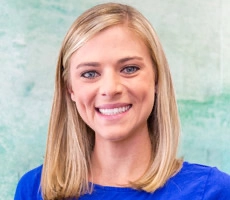
Susan Dentzer is President and Chief Executive Officer of America’s Physician Groups, the nonprofit organization representing more than 360 large physician groups focused on patient-centered, coordinated, and integrated health care that is accountable for both costs and quality. Dentzer is a highly respected health and health policy thought leader, a frequent speaker and commentator, and an author of commentaries in Modern Healthcare, the New England Journal of Medicine Catalyst, the American Journal of Public Health, and other prominent publications. She is also the editor and lead author of the book "Health Care Without Walls: A Roadmap for Reinventing U.S. Health Care." She is an elected member of the National Academy of Medicine and the Council on Foreign Relations and is a fellow of the National Academy of Social Insurance and the Hastings Center. Dentzer graduated from Dartmouth and also holds a master’s degree in health care delivery science from the institution. She is a trustee emerita of Dartmouth, chaired the institution’s Board of Trustees from 2001-2004, and served on the board of Dartmouth Health as well as the Board of Advisors of the Geisel School of Medicine at Dartmouth.
Dentzer serves on the advisory boards of the Robert J. Margolis Center for Health Policy at Duke University; the Center for Global Health Equity at Dartmouth; and the Philip R. Lee Institute for Health Policy Studies at the University of California – San Francisco (UCSF). From March 2021-March 2023, she chaired the Board of Directors of Research!America, which advocates for health-related research, and formerly chaired the board of the Global Health Council. Dentzer was also a longtime member of the Board of Directors of the International Rescue Committee, the organization that works in more than 40 countries to help those affected by humanitarian crises survive and rebuild their lives, and currently serves on IRC’s Board of Advisors.
Contact a speaker booking agent to check availability on Susan Dentzer and other top speakers and celebrities.
Susan Dentzer Speaking Topics
A focus on equity has risen to the fore in many U.S. health care systems in reaction to the killings of George Floyd, Breonna Taylor, and their repercussions, as well as the many racial and ethnic disparities highlighted anew by the COVID-19 pandemic. Both senior management and boards of directors of health care systems across the country have undertaken new efforts, or redoubled existing ones, to address equity: first in the context of provision of care and the fundamental operations of health systems, and second, in addressing the broad upstream drivers of social and economic inequity that are largely extrinsic to health care.
Actions are being taken by health systems in five main categories: speaking out publicly against inequity; taking larger steps internally to address diversity, equity, and inclusion (DEI), combat racism, and advance empowerment; widening their traditional equity lens to encompass widespread discrimination against multiple population groups; ramping up efforts to address the safety and quality of care and reducing undesirable variation as a means to reducing inequity and disparities; and using their resources to address upstream health drivers, including in priority areas of the social and economic determinants of health.
Susan Dentzer will describe how a growing number of U.S. health systems now recognize and accept that they must play a dominant role in a process of social and economic transformation to eliminate racism and other forms of discrimination and place the nation on the road to better health.
As the world reaps the fruits of genomics advances, advanced treatments for many conditions, such as cancer, are becoming available, but they are only contributing to a cost spiral that has already put affordable health coverage out of the reach of many Americans. And in the meantime, growing national health expenditures continue to pose a challenge not just to individuals’ pocketbooks, but to state treasuries, the federal government, and taxpayers. Health expenditures are crowding out spending on other critical areas such as education – leading to a vicious cycle that will probably deprive many Americans in coming years of optimal health.
What is to be done? How can the United States improve the health of its population; address the health crises afflicting so many; spread or equalize access to the best health care available; and maintain expenditures on health care within sustainable bounds? Achieving all of these outcomes may seem impossible, but there are important steps that the nation can take to get us on the right road. Susan Dentzer will describe the issues and options available to us as a nation.
Imagine a health care system that came to you -- a system that met you, as an individual, where you are, in your home, workplace, or community, in part through such ‘virtual care’ modalities as telehealth. Such a system would anticipate your needs and work to keep you as healthy as possible, and view any of your needs to access “sick care” as a possible sign that the system had let you down. This system would address the upstream drivers of your health status, and yet be as convenient and accessible as other elements of your life that you now take for granted, like ordering online. Such a system could be called ‘Health Care Without Walls.’
Susan Dentzer can describe current trends and examples moving us toward the vision of Health Care Without Walls, and the public policy changes and private sector measures also necessary to achieve it. Although there will be many benefits in achieving a far more distributed system of care outside of conventional institutional settings, such as hospitals, physicians’ offices, and nursing homes, a number of payment/reimbursement, regulatory, workforce, and human factors issues must be addressed before such a system can be realized. Dentzer can describe the need for a “21st Century Hill Burton” program to assist many of the nation’s hospitals in transforming into new roles. In particular, Dentzer can discuss the many implications for the nation’s health care work force; education and training of health care professionals; and in particular, interprofessional education and training to deliver the team-based, virtually enabled care that will increasingly be the norm. She can offer examples of organizations that are engaging in such efforts, and describe the opportunities that may emerge for research and other partnerships to advance the field.
In this informative presentation, Susan Dentzer analyzes fiscal and budgetary problems facing the US, outlines current disputes, and explains whether or not they revolve around healthcare. While examining current battles between congress and the White House, she offers both short-and long-term solutions, and explains what it all means for consumers, associations, and corporations.
As an expert on healthcare policy, Susan Dentzer cuts through the rhetoric and examines the latest policy changes and explains what they mean for the future.
She will touch upon:
- The future of Medicare reform.
- Social security, Medicare, and Medicaid.
- Rising to meet America’s healthcare challenge.
Susan Dentzer Videos



How do I book Susan Dentzer to speak at my event?
Our experienced booking agents have successfully helped clients around the world secure speakers like Susan Dentzer for speaking engagements, personal appearances, product endorsements, or corporate entertainment since 2002. Click the Check Schedule button above and complete the form on this page to check availability for Susan Dentzer, or call our office at 1.855.383.8805 to discuss your upcoming event. One of our experienced agents will be happy to help you get speaking fee information and check availability for Susan Dentzer or any other speaker of your choice.
How much does it cost to book Susan Dentzer for a speaking engagement?
Speaking fees for Susan Dentzer, or any other speakers and celebrities, are determined based on a number of factors and may change without notice. The estimated fees to book Susan Dentzer are $30,000 - $50,000 for live events and $10,000 - $20,000 for virtual events. For the most current speaking fee to hire Susan Dentzer, click the Check Schedule button above and complete the form on this page, or call our office at 1.855.383.8805 to speak directly with an experienced booking agent.
What topics does Susan Dentzer speak about?
Susan Dentzer is a keynote speaker and industry expert who speaks on a wide range of topics such as Business, Health & Wellness, Journalist, Healthcare, Political, Finance, Fitness, Women, News & Media, Futurism, Professional Development, Business Consulting, Economy, Broadcasting, Professors, Women in Tech, Women's Health, Thought Leadership, Disruptive Thinking and Influential Women.
Where does Susan Dentzer travel from?
Susan Dentzer generally travels from Washington, DC, USA and can be booked for (private) corporate events, personal appearances, keynote speeches, or other performances.
Who is the agent for Susan Dentzer?
AAE Speakers Bureau has successfully secured keynote speakers like Susan Dentzer for clients worldwide since 2002. As a full-service speaker booking agency, we have access to virtually any speaker or celebrity in the world. Our agents are happy and able to submit an offer to the speaker or celebrity of your choice, letting you benefit from our reputation and long-standing relationships in the industry. Please click the Check Schedule button above and complete the form on this page including the details of your event, or call our office at 1.855.383.8805, and one of our agents will assist you to book Susan Dentzer for your next private or corporate function.
What is a full-service speaker booking agency?
AAE Speakers Bureau is a full-service speaker booking agency, meaning we can completely manage the speaker’s or celebrity’s engagement with your organization from the time of booking your speaker through the event’s completion. We provide all of the services you need to host Susan Dentzer or any other speaker of your choice, including offer negotiation, contractual assistance, accounting and billing, and event speaker travel and logistics services. When you book a speaker with us, we manage the process of hosting a speaker for you as an extension of your team. Our goal is to give our clients peace of mind and a best-in-class service experience when booking a speaker with us.
Why is AAE Speakers Bureau different from other booking agencies?
If you’re looking for the best speaker recommendations, paired with a top-notch customer service experience, you’re in the right place. At AAE Speakers Bureau, we exclusively represent the interests of our clients - professional organizations, companies, universities, and associations. We intentionally do not represent the speakers we feature or book. That is so we can present our clients with the broadest and best performing set of speaker options in the market today, and we can make these recommendations without any obligation to promote a specific speaker over another. This is why when our agents suggest a speaker for your event, you can be assured that they are of the highest quality with a history of proven success with our other clients.
Susan Dentzer is a keynote speaker and industry expert who speaks on a wide range of topics including Business, Health & Wellness and Journalist. The estimated speaking fee range to book Susan Dentzer for live events is $30,000 - $50,000, and for virtual events $10,000 - $20,000. Susan Dentzer generally travels from Washington, DC, USA and can be booked for (private) corporate events, personal appearances, keynote speeches, or other performances. Similar motivational celebrity speakers are Patrice A. Harris, Dr. Joel Selanikio and Maddy Dychtwald. Contact All American Speakers for ratings, reviews, videos and information on scheduling Susan Dentzer for an upcoming event.
SPEAKING TOPICS
Susan Dentzer Speaking Topics
-
Health Equity Opportunities and Challenges for Health System Leaders
A focus on equity has risen to the fore in many U.S. health care systems in reaction to the killings of George Floyd, Breonna Taylor, and their repercussions, as well as the many racial and ethnic disparities highlighted anew by the COVID-19 pandemic. Both senior management and boards of directors of health care systems across the country have undertaken new efforts, or redoubled existing ones, to address equity: first in the context of provision of care and the fundamental operations of health systems, and second, in addressing the broad upstream drivers of social and economic inequity that are largely extrinsic to health care.
Actions are being taken by health systems in five main categories: speaking out publicly against inequity; taking larger steps internally to address diversity, equity, and inclusion (DEI), combat racism, and advance empowerment; widening their traditional equity lens to encompass widespread discrimination against multiple population groups; ramping up efforts to address the safety and quality of care and reducing undesirable variation as a means to reducing inequity and disparities; and using their resources to address upstream health drivers, including in priority areas of the social and economic determinants of health.
Susan Dentzer will describe how a growing number of U.S. health systems now recognize and accept that they must play a dominant role in a process of social and economic transformation to eliminate racism and other forms of discrimination and place the nation on the road to better health.
-
Unequal Opportunities, Unequal Outcomes? Averting the Worst for Health & Health Care in America
As the world reaps the fruits of genomics advances, advanced treatments for many conditions, such as cancer, are becoming available, but they are only contributing to a cost spiral that has already put affordable health coverage out of the reach of many Americans. And in the meantime, growing national health expenditures continue to pose a challenge not just to individuals’ pocketbooks, but to state treasuries, the federal government, and taxpayers. Health expenditures are crowding out spending on other critical areas such as education – leading to a vicious cycle that will probably deprive many Americans in coming years of optimal health.
What is to be done? How can the United States improve the health of its population; address the health crises afflicting so many; spread or equalize access to the best health care available; and maintain expenditures on health care within sustainable bounds? Achieving all of these outcomes may seem impossible, but there are important steps that the nation can take to get us on the right road. Susan Dentzer will describe the issues and options available to us as a nation.
-
Health Care Without Walls: A Roadmap for Reinventing U.S. Health Care
Imagine a health care system that came to you -- a system that met you, as an individual, where you are, in your home, workplace, or community, in part through such ‘virtual care’ modalities as telehealth. Such a system would anticipate your needs and work to keep you as healthy as possible, and view any of your needs to access “sick care” as a possible sign that the system had let you down. This system would address the upstream drivers of your health status, and yet be as convenient and accessible as other elements of your life that you now take for granted, like ordering online. Such a system could be called ‘Health Care Without Walls.’
Susan Dentzer can describe current trends and examples moving us toward the vision of Health Care Without Walls, and the public policy changes and private sector measures also necessary to achieve it. Although there will be many benefits in achieving a far more distributed system of care outside of conventional institutional settings, such as hospitals, physicians’ offices, and nursing homes, a number of payment/reimbursement, regulatory, workforce, and human factors issues must be addressed before such a system can be realized. Dentzer can describe the need for a “21st Century Hill Burton” program to assist many of the nation’s hospitals in transforming into new roles. In particular, Dentzer can discuss the many implications for the nation’s health care work force; education and training of health care professionals; and in particular, interprofessional education and training to deliver the team-based, virtually enabled care that will increasingly be the norm. She can offer examples of organizations that are engaging in such efforts, and describe the opportunities that may emerge for research and other partnerships to advance the field.
-
Political Economics
In this informative presentation, Susan Dentzer analyzes fiscal and budgetary problems facing the US, outlines current disputes, and explains whether or not they revolve around healthcare. While examining current battles between congress and the White House, she offers both short-and long-term solutions, and explains what it all means for consumers, associations, and corporations.
-
The Future of Healthcare Policy
As an expert on healthcare policy, Susan Dentzer cuts through the rhetoric and examines the latest policy changes and explains what they mean for the future.
She will touch upon:
- The future of Medicare reform.
- Social security, Medicare, and Medicaid.
- Rising to meet America’s healthcare challenge.
VIDEO
Susan Dentzer Videos
REVIEWS
Susan Dentzer Reviews
-
InterSystems - Nov 02 2021
-
InterSystems - Oct 03 2019
-
Central Penn Business Group on Health - Jun 05 2018
FAQS
-
How do I book Susan Dentzer to speak at my event?
Our experienced booking agents have successfully helped clients around the world secure speakers like Susan Dentzer for speaking engagements, personal appearances, product endorsements, or corporate entertainment since 2002. Click the Check Schedule button above and complete the form on this page to check availability for Susan Dentzer, or call our office at 1.855.383.8805 to discuss your upcoming event. One of our experienced agents will be happy to help you get speaking fee information and check availability for Susan Dentzer or any other speaker of your choice. -
How much does it cost to book Susan Dentzer for a speaking engagement?
Speaking fees for Susan Dentzer, or any other speakers and celebrities, are determined based on a number of factors and may change without notice. The estimated fees to book Susan Dentzer are $30,000 - $50,000 for live events and $10,000 - $20,000 for virtual events. For the most current speaking fee to hire Susan Dentzer, click the Check Schedule button above and complete the form on this page, or call our office at 1.855.383.8805 to speak directly with an experienced booking agent. -
What topics does Susan Dentzer speak about?
Susan Dentzer is a keynote speaker and industry expert who speaks on a wide range of topics such as Business, Health & Wellness, Journalist, Healthcare, Political, Finance, Fitness, Women, News & Media, Futurism, Professional Development, Business Consulting, Economy, Broadcasting, Professors, Women in Tech, Women's Health, Thought Leadership, Disruptive Thinking and Influential Women. -
Where does Susan Dentzer travel from?
Susan Dentzer generally travels from Washington, DC, USA and can be booked for (private) corporate events, personal appearances, keynote speeches, or other performances. -
Who is the agent for Susan Dentzer?
AAE Speakers Bureau has successfully secured keynote speakers like Susan Dentzer for clients worldwide since 2002. As a full-service speaker booking agency, we have access to virtually any speaker or celebrity in the world. Our agents are happy and able to submit an offer to the speaker or celebrity of your choice, letting you benefit from our reputation and long-standing relationships in the industry. Please click the Check Schedule button above and complete the form on this page including the details of your event, or call our office at 1.855.383.8805, and one of our agents will assist you to book Susan Dentzer for your next private or corporate function. -
What is a full-service speaker booking agency?
AAE Speakers Bureau is a full-service speaker booking agency, meaning we can completely manage the speaker’s or celebrity’s engagement with your organization from the time of booking your speaker through the event’s completion. We provide all of the services you need to host Susan Dentzer or any other speaker of your choice, including offer negotiation, contractual assistance, accounting and billing, and event speaker travel and logistics services. When you book a speaker with us, we manage the process of hosting a speaker for you as an extension of your team. Our goal is to give our clients peace of mind and a best-in-class service experience when booking a speaker with us. -
Why is AAE Speakers Bureau different from other booking agencies?
If you’re looking for the best speaker recommendations, paired with a top-notch customer service experience, you’re in the right place. At AAE Speakers Bureau, we exclusively represent the interests of our clients - professional organizations, companies, universities, and associations. We intentionally do not represent the speakers we feature or book. That is so we can present our clients with the broadest and best performing set of speaker options in the market today, and we can make these recommendations without any obligation to promote a specific speaker over another. This is why when our agents suggest a speaker for your event, you can be assured that they are of the highest quality with a history of proven success with our other clients.
BOOK SUSAN DENTZER
We are happy to assist you with your interest in booking a speaker or celebrity for your event, your organization, and the type of talent you would like to secure, and an agent will be in touch shortly.
Fill out the form below to or call us at 1.855.383.8805 if need immediate assistance.
We respond to most inquiries within 4 hours. Under special circumstances, it may take up to 24 hours.
We are happy to help! Call us to speak with a booking agent about your event or specific speaker request.
Gauge Interest and check availability for appearances, speaking engagements, or corporate events.
Provide you with speaking fee to book Susan Dentzer or other celebrity appearance fees
Give you personal recommendations for the best keynote speakers or celebrities
Assist you with any questions you have throughout the talent booking process


This website is a resource for event professionals and strives to provide the most comprehensive catalog of thought leaders and industry experts to consider for speaking engagements. A listing or profile on this website does not imply an agency affiliation or endorsement by the talent.
All American Entertainment (AAE) exclusively represents the interests of talent buyers, and does not claim to be the agency or management for any speaker or artist on this site. AAE is a talent booking agency for paid events only. We do not handle requests for donation of time or media requests for interviews, and cannot provide celebrity contact information.