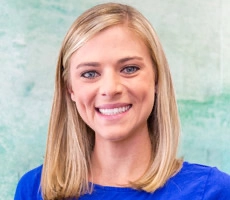
Manasa Mantravadi
Keynote Speaker: Pediatrician & Founder of Ahimsa, the Conscious Cafeteria Program; Child Health and Nutritional Food Systems Expert
-
Travels From:
-
Speaking Fee:
-
Categories:
Manasa Mantravadi Biography
Dr. Manasa Mantravadi is a pediatrician-turned-entrepreneur leading a national movement to prevent disease before it starts through healthier food systems at home, at school and wherever children dine. As the founder of Ahimsa, the Conscious Cafeteria Program and The Pediatrician Kitchen, Dr. Mantravadi is proving that food is health and transforming the way the next generation is nourished.
Shifting from treating disease to preventing it, Dr. Mantravadi replaces plastics and processed meals with fresh, sustainable and reusable food systems—whether around the family dinner table or in school cafeterias. She founded Ahimsa, the first and only colorful stainless steel dinnerware for kids, designed to be free from harmful chemicals found in plastic. Rooted in science and sustainability, Ahimsa provides families with safe, durable and eco-friendly mealtime solutions. Through Ahimsa, Dr. Mantravadi is not just eliminating toxic foodware—she is redefining how families and schools serve meals that protect both children’s health and the planet.
Through the Conscious Cafeteria Program, Dr. Mantravadi leads the transition in school cafeterias from heat-and-serve processed meals to scratch-cooked, fresh and nutritious food served on reusable trays, turning cafeterias into classrooms where children learn the value of healthy eating and sustainability.
With The Pediatrician Kitchen, Dr. Mantravadi empowers families and schools with the knowledge and tools to make healthy eating, home cooking and culinary medicine an investment in a child’s long-term health. By making science-backed nutrition accessible and actionable, she equips parents and caregivers with the skills to create lifelong healthy habits at the dinner table.
Recognized as a Forbes Next 1000 entrepreneur and an Inc. 200 female founder, Dr. Mantravadi has been featured by the Clinton Global Initiative, The Washington Post, Parents, "Today" and "Good Morning America." By bridging medicine, business, policy and education, Dr. Mantravadi ensures that every child, wherever they eat, has access to healthier meals, safer foodware, nutrition education and a more sustainable future.
Food is medicine. Food is health. And food is the best investment in our children’s health now and as they grow into adults.
Contact a speaker booking agent to check availability on Manasa Mantravadi and other top speakers and celebrities.
Manasa Mantravadi Speaking Topics
This hands-on, high-energy workshop gives school nutrition leaders a real medical understanding of how food becomes health (or disease) in children. Pediatrician Dr. Manasa Mantravadi guides participants through five essential topics every district must understand: sugar, salt, fruits & vegetables, whole grains, and plastic exposure.
Using real clinical cases, simplified physiology, and the latest published pediatric evidence, participants will interpret glucose curves, compare sodium levels, analyze whole grains vs. refined grains, evaluate produce-based meal patterns, and assess the health risks of plastic foodware.
Attendees leave equipped with the medical “why” behind school meal decisions—and clear, practical ways to improve child health starting immediately.
When Americans picture healthcare workers, they imagine someone like Dr. Manasa Mantravadi—a pediatrician in a white coat or a nurse at a bedside. But one of our most powerful public health workers stands behind a lunch line in a hairnet, serving your child a warm plate of food nearly every school day.
For millions of children, the first—and sometimes only—line of defense against hunger is the school cafeteria. The person behind the tray isn’t just feeding our children—they’re meant to be protecting their health. That was the original vision of the National School Lunch Program when it launched in 1946: to safeguard children’s health and support American farmers. Today, however, the program is struggling to fully deliver on that promise.
Over 30 million children rely on school meals each day. For many low-income students, that meal might be their only food of the day. Yet we allocate just $4.50 per child to cover food, labor, equipment, and utilities. With only 40% going to food, that leaves less than $2.00 for actual ingredients. Rising food prices—up over 20% in recent years—leaves nutrition teams with an impossible task: serve balanced healthy meals and support staff on less than the cost of an average latte.
To make ends meet, many schools rely on ultra-processed commodities: shelf-stable food products and plastic-wrapped entrées served on disposable styrofoam trays.
Today, 67% of an American child’s calories come from ultra-processed foods (UPF)—industrial products filled with additives, dyes, and preservatives. Often packaged, stored, or served in plastics—the combination of UPFs and plastic chemicals expose children to endocrine-disrupting chemicals that have been linked to obesity, diabetes, early puberty, and neurodevelopmental disorders like ADHD.
- Nearly 1 in 5 American children is obese
- Since 2020, pediatric type 2 diabetes has risen by 77%.
- 1 in 9 children have ADHD; synthetic food dyes are linked to behavioral issues
- The CDC reports that 90% of children don’t eat enough vegetables, and 60% don’t meet fruit intake guidelines.
Kids aren’t making bad choices—they’re responding to what’s affordable, available, and aggressively marketed. In schools, meals are still often heat-and-serve, plastic-laden, and heavily processed—not out of apathy, but due to systemic constraints. The National School Lunch Program serves 5 billion meals a year, making it the second-largest federally funded food program—and the largest restaurant chain in America, bigger than McDonald’s, Starbucks, and Subway combined. That scale presents a powerful opportunity to shift the trajectory of children’s health.
Manasa Mantravadi Videos

How do I book Manasa Mantravadi to speak at my event?
Our experienced booking agents have successfully helped clients around the world secure speakers like Manasa Mantravadi for speaking engagements, personal appearances, product endorsements, or corporate entertainment since 2002. Click the Check Schedule button above and complete the form on this page to check availability for Manasa Mantravadi, or call our office at 1.800.698.2536 to discuss your upcoming event. One of our experienced agents will be happy to help you get speaking fee information and check availability for Manasa Mantravadi or any other speaker of your choice.
How much does it cost to book Manasa Mantravadi for a speaking engagement?
Speaking fees for Manasa Mantravadi, or any other speakers and celebrities, are determined based on a number of factors and may change without notice. The estimated fees to book Manasa Mantravadi are $20,000 - $30,000 for live events and $10,000 - $20,000 for virtual events. For the most current speaking fee to hire Manasa Mantravadi, click the Check Schedule button above and complete the form on this page, or call our office at 1.800.698.2536 to speak directly with an experienced booking agent.
What topics does Manasa Mantravadi speak about?
Manasa Mantravadi is a keynote speaker and industry expert who speaks on a wide range of topics such as Fitness, Health & Wellness, Medicine, Nutrition, Obesity Awareness Month, Feminism, Asian & Pacific Heritage, Entrepreneurship, Workshop and Family & Parenting.
Where does Manasa Mantravadi travel from?
Manasa Mantravadi generally travels from Indianapolis, IN, USA and can be booked for (private) corporate events, personal appearances, keynote speeches, or other performances.
Who is the agent for Manasa Mantravadi?
AAE Speakers Bureau has successfully secured keynote speakers like Manasa Mantravadi for clients worldwide since 2002. As a full-service speaker booking agency, we have access to virtually any speaker or celebrity in the world. Our agents are happy and able to submit an offer to the speaker or celebrity of your choice, letting you benefit from our reputation and long-standing relationships in the industry. Please click the Check Schedule button above and complete the form on this page including the details of your event, or call our office at 1.800.698.2536, and one of our agents will assist you to book Manasa Mantravadi for your next private or corporate function.
What is a full-service speaker booking agency?
AAE Speakers Bureau is a full-service speaker booking agency, meaning we can completely manage the speaker’s or celebrity’s engagement with your organization from the time of booking your speaker through the event’s completion. We provide all of the services you need to host Manasa Mantravadi or any other speaker of your choice, including offer negotiation, contractual assistance, accounting and billing, and event speaker travel and logistics services. When you book a speaker with us, we manage the process of hosting a speaker for you as an extension of your team. Our goal is to give our clients peace of mind and a best-in-class service experience when booking a speaker with us.
Why is AAE Speakers Bureau different from other booking agencies?
If you’re looking for the best speaker recommendations, paired with a top-notch customer service experience, you’re in the right place. At AAE Speakers Bureau, we exclusively represent the interests of our clients - professional organizations, companies, universities, and associations. We intentionally do not represent the speakers we feature or book. That is so we can present our clients with the broadest and best performing set of speaker options in the market today, and we can make these recommendations without any obligation to promote a specific speaker over another. This is why when our agents suggest a speaker for your event, you can be assured that they are of the highest quality with a history of proven success with our other clients.
Manasa Mantravadi is a keynote speaker and industry expert who speaks on a wide range of topics including Fitness, Health & Wellness and Medicine. The estimated speaking fee range to book Manasa Mantravadi for live events is $20,000 - $30,000, and for virtual events $10,000 - $20,000. Manasa Mantravadi generally travels from Indianapolis, IN, USA and can be booked for (private) corporate events, personal appearances, keynote speeches, or other performances. Similar motivational celebrity speakers are Michelle May, MD, Gary Brecka and Obi Obadike. Contact All American Speakers for ratings, reviews, videos and information on scheduling Manasa Mantravadi for an upcoming event.
SPEAKING TOPICS
Manasa Mantravadi Speaking Topics
-
INTERACTIVE WORKSHOP AGENDA - Inside the Child’s Body: A 5-Topic Mini Medical School for School Nutrition Leaders
This hands-on, high-energy workshop gives school nutrition leaders a real medical understanding of how food becomes health (or disease) in children. Pediatrician Dr. Manasa Mantravadi guides participants through five essential topics every district must understand: sugar, salt, fruits & vegetables, whole grains, and plastic exposure.
Using real clinical cases, simplified physiology, and the latest published pediatric evidence, participants will interpret glucose curves, compare sodium levels, analyze whole grains vs. refined grains, evaluate produce-based meal patterns, and assess the health risks of plastic foodware.
Attendees leave equipped with the medical “why” behind school meal decisions—and clear, practical ways to improve child health starting immediately.
-
The Most Overlooked Healthcare Worker in America Is Behind the School Lunch Line
When Americans picture healthcare workers, they imagine someone like Dr. Manasa Mantravadi—a pediatrician in a white coat or a nurse at a bedside. But one of our most powerful public health workers stands behind a lunch line in a hairnet, serving your child a warm plate of food nearly every school day.
For millions of children, the first—and sometimes only—line of defense against hunger is the school cafeteria. The person behind the tray isn’t just feeding our children—they’re meant to be protecting their health. That was the original vision of the National School Lunch Program when it launched in 1946: to safeguard children’s health and support American farmers. Today, however, the program is struggling to fully deliver on that promise.
Over 30 million children rely on school meals each day. For many low-income students, that meal might be their only food of the day. Yet we allocate just $4.50 per child to cover food, labor, equipment, and utilities. With only 40% going to food, that leaves less than $2.00 for actual ingredients. Rising food prices—up over 20% in recent years—leaves nutrition teams with an impossible task: serve balanced healthy meals and support staff on less than the cost of an average latte.
To make ends meet, many schools rely on ultra-processed commodities: shelf-stable food products and plastic-wrapped entrées served on disposable styrofoam trays.
Today, 67% of an American child’s calories come from ultra-processed foods (UPF)—industrial products filled with additives, dyes, and preservatives. Often packaged, stored, or served in plastics—the combination of UPFs and plastic chemicals expose children to endocrine-disrupting chemicals that have been linked to obesity, diabetes, early puberty, and neurodevelopmental disorders like ADHD.
- Nearly 1 in 5 American children is obese
- Since 2020, pediatric type 2 diabetes has risen by 77%.
- 1 in 9 children have ADHD; synthetic food dyes are linked to behavioral issues
- The CDC reports that 90% of children don’t eat enough vegetables, and 60% don’t meet fruit intake guidelines.
Kids aren’t making bad choices—they’re responding to what’s affordable, available, and aggressively marketed. In schools, meals are still often heat-and-serve, plastic-laden, and heavily processed—not out of apathy, but due to systemic constraints. The National School Lunch Program serves 5 billion meals a year, making it the second-largest federally funded food program—and the largest restaurant chain in America, bigger than McDonald’s, Starbucks, and Subway combined. That scale presents a powerful opportunity to shift the trajectory of children’s health.
VIDEO
Manasa Mantravadi Videos
FAQS
-
How do I book Manasa Mantravadi to speak at my event?
Our experienced booking agents have successfully helped clients around the world secure speakers like Manasa Mantravadi for speaking engagements, personal appearances, product endorsements, or corporate entertainment since 2002. Click the Check Schedule button above and complete the form on this page to check availability for Manasa Mantravadi, or call our office at 1.800.698.2536 to discuss your upcoming event. One of our experienced agents will be happy to help you get speaking fee information and check availability for Manasa Mantravadi or any other speaker of your choice. -
How much does it cost to book Manasa Mantravadi for a speaking engagement?
Speaking fees for Manasa Mantravadi, or any other speakers and celebrities, are determined based on a number of factors and may change without notice. The estimated fees to book Manasa Mantravadi are $20,000 - $30,000 for live events and $10,000 - $20,000 for virtual events. For the most current speaking fee to hire Manasa Mantravadi, click the Check Schedule button above and complete the form on this page, or call our office at 1.800.698.2536 to speak directly with an experienced booking agent. -
What topics does Manasa Mantravadi speak about?
Manasa Mantravadi is a keynote speaker and industry expert who speaks on a wide range of topics such as Fitness, Health & Wellness, Medicine, Nutrition, Obesity Awareness Month, Feminism, Asian & Pacific Heritage, Entrepreneurship, Workshop and Family & Parenting. -
Where does Manasa Mantravadi travel from?
Manasa Mantravadi generally travels from Indianapolis, IN, USA and can be booked for (private) corporate events, personal appearances, keynote speeches, or other performances. -
Who is the agent for Manasa Mantravadi?
AAE Speakers Bureau has successfully secured keynote speakers like Manasa Mantravadi for clients worldwide since 2002. As a full-service speaker booking agency, we have access to virtually any speaker or celebrity in the world. Our agents are happy and able to submit an offer to the speaker or celebrity of your choice, letting you benefit from our reputation and long-standing relationships in the industry. Please click the Check Schedule button above and complete the form on this page including the details of your event, or call our office at 1.800.698.2536, and one of our agents will assist you to book Manasa Mantravadi for your next private or corporate function. -
What is a full-service speaker booking agency?
AAE Speakers Bureau is a full-service speaker booking agency, meaning we can completely manage the speaker’s or celebrity’s engagement with your organization from the time of booking your speaker through the event’s completion. We provide all of the services you need to host Manasa Mantravadi or any other speaker of your choice, including offer negotiation, contractual assistance, accounting and billing, and event speaker travel and logistics services. When you book a speaker with us, we manage the process of hosting a speaker for you as an extension of your team. Our goal is to give our clients peace of mind and a best-in-class service experience when booking a speaker with us. -
Why is AAE Speakers Bureau different from other booking agencies?
If you’re looking for the best speaker recommendations, paired with a top-notch customer service experience, you’re in the right place. At AAE Speakers Bureau, we exclusively represent the interests of our clients - professional organizations, companies, universities, and associations. We intentionally do not represent the speakers we feature or book. That is so we can present our clients with the broadest and best performing set of speaker options in the market today, and we can make these recommendations without any obligation to promote a specific speaker over another. This is why when our agents suggest a speaker for your event, you can be assured that they are of the highest quality with a history of proven success with our other clients.
BOOK MANASA MANTRAVADI
We are happy to assist you with your interest in booking a speaker or celebrity for your event, your organization, and the type of talent you would like to secure, and an agent will be in touch shortly.
Fill out the form below to or call us at 1-800-698-2536 if need immediate assistance.
We respond to most inquiries within 4 hours. Under special circumstances, it may take up to 24 hours.
We are happy to help! Call us to speak with a booking agent about your event or specific speaker request.
Gauge Interest and check availability for appearances, speaking engagements, or corporate events.
Provide you with speaking fee to book Manasa Mantravadi or other celebrity appearance fees
Give you personal recommendations for the best keynote speakers or celebrities
Assist you with any questions you have throughout the talent booking process


This website is a resource for event professionals and strives to provide the most comprehensive catalog of thought leaders and industry experts to consider for speaking engagements. A listing or profile on this website does not imply an agency affiliation or endorsement by the talent.
All American Entertainment (AAE) exclusively represents the interests of talent buyers, and does not claim to be the agency or management for any speaker or artist on this site. AAE is a talent booking agency for paid events only. We do not handle requests for donation of time or media requests for interviews, and cannot provide celebrity contact information.