Alfie Kohn
Keynote Speaker: Renowned Author & Lecturer Known for His Influential Work in Education, Parenting & Human Behavior
-
Travels From:
-
Speaking Fee:
-
Categories:
Alfie Kohn Biography
Alfie Kohn is a prominent American author and lecturer renowned for his influential work in education, parenting, and human behavior. With a strong advocacy for progressive education, Kohn has dedicated his career to challenging traditional practices in schooling and parenting, drawing on extensive social science research. His academic journey began with a B.A. from Brown University, where he created an interdisciplinary course of study, followed by an M.A. from the University of Chicago. Kohn’s unique educational background has shaped his critical perspective on conventional methods, particularly regarding competition, standardized testing, and traditional discipline.
Throughout his career, Kohn has authored 14 books, including notable titles such as “Punished by Rewards” and “The Homework Myth,” which have sparked widespread discussion and debate. His work critiques the reliance on grades and external rewards, arguing that they undermine intrinsic motivation and genuine learning. Kohn’s ideas have resonated with educators and parents alike, positioning him as a leading voice in the movement against traditional educational practices that prioritize compliance over creativity and critical thinking.
Kohn’s lectures and writings have reached a global audience, with his books translated into multiple languages. He has spoken at numerous conferences and institutions, advocating for a more compassionate and understanding approach to education and parenting. His insights have been featured in prestigious publications such as The Atlantic and The New York Times, further solidifying his reputation as a thought leader in the field.
In addition to his writing and speaking engagements, Kohn has contributed articles to various academic journals and magazines, emphasizing the importance of fostering a learning environment that prioritizes student engagement and well-being. His work continues to inspire educators and parents to rethink their approaches to teaching and child-rearing, making a lasting impact on the landscape of education.
Contact a speaker booking agent to check availability on Alfie Kohn and other top speakers and celebrities.
Alfie Kohn Speaking Topics
What does it mean to say we want our kids to be "successful"? In some neighborhoods, that word translates as making higher grades and test scores than other people's children – so they'll be accepted by elite colleges, so they'll get high-paying jobs, so they can... well, what? Erich Fromm once observed that "few parents have the courage to care more for their children's happiness than for their success." Indeed, research shows that affluent, high-achieving students are more likely to suffer from depression – and less likely to value learning for its own sake. Alfie Kohn invites us to rethink basic assumptions about competition, school achievement, and the relationship between how we're raising our kids and how we hope they'll turn out.
Advice for raising children typically comes in two flavors: threats (known euphemistically as "consequences") and bribes ("positive reinforcement"). Either we make kids suffer to teach them a lesson, or we dangle goodies in front of them for doing as they're told. Rewards and punishments are two sides of the same coin, and unfortunately, neither can buy anything more than temporary obedience. Manipulating children's behavior – by means of time-outs, contrived praise, privileges offered, and privileges taken away – can never help them to reflect on the kind of people they want to be. Instead of encouraging kids to take responsibility for their actions, it makes them dependent on rewards and punishments. Rather than promoting generosity and compassion, it leads them to focus on the consequence to themselves of pleasing the adult.
This presentation, by Alfie Kohn, the author of "Unconditional Parenting," will show why carrots and sticks are not only ineffective but actually counterproductive over the long haul. To raise children who are good learners and good people requires us to abandon strategies that do things to kids, in favor of an approach in which we work with them. And underlying those "working with" strategies is the message that children do not have to earn our approval, that we love them not for what they do but just for who they are.
- Raising Rebels: Helping Kids to Challenge the Status Quo
- Fear of Spoiling: Rethinking Common Assumptions About Children (and Parenting)
This workshop, by the author of "Beyond Discipline: From Compliance to Community," addresses the nonacademic realm of school life – and specifically the ways that discipline or classroom management not only tends to backfire, but actively interferes with the process of helping students grow into responsible, compassionate people. We begin by addressing the problems with trying to manipulate students’ behavior with the use of rewards (including praise) or punishment (euphemistically called “consequences”). Then we dig deeper, looking at how much is lost by focusing on behavior in the first place, how a demand for short-term compliance (which is all that carrots and sticks can ever produce) gets in the way of our long-term goals for kids, and how many problems originate with the assumption that the teacher should be in control of the classroom.
In the second part of the workshop, participants hear about, see (on videotape), discuss, and make sense of the alternatives:
- solving problems rather than administering discipline,
- working with students rather than doing things to them,
- addressing how “misbehavior” may be due to a curriculum that isn’t engaging,
- transforming the classroom (and school) into caring communities where students feel they belong, and
- bringing students in on making decisions about how they want their classroom to be — and how to make that happen.
Rethinking Rewards, Assessment, and Learning
Most educators, if asked, can explain the difference between extrinsic and intrinsic motivation — between carrots and sticks on the one hand, and love of learning on the other. But many of our daily practices suggest that we fail to understand the importance of the distinction. In this workshop, Alfie Kohn, the author of "Punished By Rewards," shows why we need to stop asking “How motivated are my students?” and start asking “How are my students motivated?”
That question, in turn, leads to an even more surprising contrast: the distinction between getting students to think about their performance (that is, how well they are doing) and getting them to think about the learning itself (what they are doing). These orientations often pull in opposite directions, which means that too much emphasis on achievement can reduce students’ interest in learning – and cause them to avoid challenging tasks. When the point is to prove how smart you are, there is less inclination to engage deeply with ideas.
Thus, the problem with standardized testing is not only how bad the tests themselves are, but also how much attention is paid to the results. Even new, “authentic” assessments may backfire if students are constantly led to ask, “How am I doing?” Likewise, research demonstrates that students who have come to focus on grades are likely to think less creatively and come to see learning as a chore. (“Do we have to know this?”)
This workshop urges teachers and administrators to reconsider basic assumptions about motivation in general and evaluation in particular. Participants are helped to develop strategies that tap children’s natural desire to explore ideas:
- creating a curriculum that is meaningful and relevant to students’ interests
- bringing students in on the process of making decisions about their learning
- transforming classrooms into caring communities where students feel safe and connected to others, and
- moving away from traditional grading in favor of more constructive and learner-centered approaches to feedback.
Alfie Kohn Videos




Feel-Bad Education: And Other Contrarian Essays on Children and Schooling

The Homework Myth: Why Our Kids Get Too Much of a Bad Thing
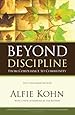
Beyond Discipline: From Compliance to Community
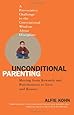
Unconditional Parenting: Moving from Rewards and Punishments to Love and Reason
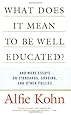
What Does it Mean to Be Well Educated? And Other Essays on Standards, Grading, and Other Follies
How do I book Alfie Kohn to speak at my event?
Our experienced booking agents have successfully helped clients around the world secure speakers like Alfie Kohn for speaking engagements, personal appearances, product endorsements, or corporate entertainment since 2002. Click the Check Schedule button above and complete the form on this page to check availability for Alfie Kohn, or call our office at 1.855.383.8805 to discuss your upcoming event. One of our experienced agents will be happy to help you get speaking fee information and check availability for Alfie Kohn or any other speaker of your choice.
How much does it cost to book Alfie Kohn for a speaking engagement?
Speaking fees for Alfie Kohn, or any other speakers and celebrities, are determined based on a number of factors and may change without notice. The estimated fees to book Alfie Kohn are Below $10,000 for live events and Below $10,000 for virtual events. For the most current speaking fee to hire Alfie Kohn, click the Check Schedule button above and complete the form on this page, or call our office at 1.855.383.8805 to speak directly with an experienced booking agent.
What topics does Alfie Kohn speak about?
Alfie Kohn is a keynote speaker and industry expert who speaks on a wide range of topics such as Business, Personal Growth, Author, Non-Fiction Authors, Inspirational, Family & Parenting, Health & Wellness, Nutrition, Science, Healthcare, Education, Motivational, Early Childhood Education, Thought Leadership, Disruptive Thinking, Education Reform, Marketing, Art & Design and Workshop.
Where does Alfie Kohn travel from?
Alfie Kohn generally travels from Boston, MA, USA and can be booked for (private) corporate events, personal appearances, keynote speeches, or other performances.
Who is the agent for Alfie Kohn?
AAE Speakers Bureau has successfully secured keynote speakers like Alfie Kohn for clients worldwide since 2002. As a full-service speaker booking agency, we have access to virtually any speaker or celebrity in the world. Our agents are happy and able to submit an offer to the speaker or celebrity of your choice, letting you benefit from our reputation and long-standing relationships in the industry. Please click the Check Schedule button above and complete the form on this page including the details of your event, or call our office at 1.855.383.8805, and one of our agents will assist you to book Alfie Kohn for your next private or corporate function.
What is a full-service speaker booking agency?
AAE Speakers Bureau is a full-service speaker booking agency, meaning we can completely manage the speaker’s or celebrity’s engagement with your organization from the time of booking your speaker through the event’s completion. We provide all of the services you need to host Alfie Kohn or any other speaker of your choice, including offer negotiation, contractual assistance, accounting and billing, and event speaker travel and logistics services. When you book a speaker with us, we manage the process of hosting a speaker for you as an extension of your team. Our goal is to give our clients peace of mind and a best-in-class service experience when booking a speaker with us.
Why is AAE Speakers Bureau different from other booking agencies?
If you’re looking for the best speaker recommendations, paired with a top-notch customer service experience, you’re in the right place. At AAE Speakers Bureau, we exclusively represent the interests of our clients - professional organizations, companies, universities, and associations. We intentionally do not represent the speakers we feature or book. That is so we can present our clients with the broadest and best performing set of speaker options in the market today, and we can make these recommendations without any obligation to promote a specific speaker over another. This is why when our agents suggest a speaker for your event, you can be assured that they are of the highest quality with a history of proven success with our other clients.
Alfie Kohn is a keynote speaker and industry expert who speaks on a wide range of topics including Business, Personal Growth and Author. The estimated speaking fee range to book Alfie Kohn for live events is Below $10,000, and for virtual events Below $10,000. Alfie Kohn generally travels from Boston, MA, USA and can be booked for (private) corporate events, personal appearances, keynote speeches, or other performances. Similar motivational celebrity speakers are Anthony Rao, Gever Tulley and Maureen Healy. Contact All American Speakers for ratings, reviews, videos and information on scheduling Alfie Kohn for an upcoming event.
SPEAKING TOPICS
Alfie Kohn Speaking Topics
-
Pushed Too Hard: Parenting in an Achievement-Crazy Culture (for parents)
What does it mean to say we want our kids to be "successful"? In some neighborhoods, that word translates as making higher grades and test scores than other people's children – so they'll be accepted by elite colleges, so they'll get high-paying jobs, so they can... well, what? Erich Fromm once observed that "few parents have the courage to care more for their children's happiness than for their success." Indeed, research shows that affluent, high-achieving students are more likely to suffer from depression – and less likely to value learning for its own sake. Alfie Kohn invites us to rethink basic assumptions about competition, school achievement, and the relationship between how we're raising our kids and how we hope they'll turn out.
-
Unconditional Parenting: Beyond Bribes & Threats (for parents)
Advice for raising children typically comes in two flavors: threats (known euphemistically as "consequences") and bribes ("positive reinforcement"). Either we make kids suffer to teach them a lesson, or we dangle goodies in front of them for doing as they're told. Rewards and punishments are two sides of the same coin, and unfortunately, neither can buy anything more than temporary obedience. Manipulating children's behavior – by means of time-outs, contrived praise, privileges offered, and privileges taken away – can never help them to reflect on the kind of people they want to be. Instead of encouraging kids to take responsibility for their actions, it makes them dependent on rewards and punishments. Rather than promoting generosity and compassion, it leads them to focus on the consequence to themselves of pleasing the adult.
This presentation, by Alfie Kohn, the author of "Unconditional Parenting," will show why carrots and sticks are not only ineffective but actually counterproductive over the long haul. To raise children who are good learners and good people requires us to abandon strategies that do things to kids, in favor of an approach in which we work with them. And underlying those "working with" strategies is the message that children do not have to earn our approval, that we love them not for what they do but just for who they are.
-
Additional Speaking Topics (for parents)
- Raising Rebels: Helping Kids to Challenge the Status Quo
- Fear of Spoiling: Rethinking Common Assumptions About Children (and Parenting)
-
Beyond Bribes and Threats: Realistic Alternatives to Controlling Students’ Behavior (for educators)
This workshop, by the author of "Beyond Discipline: From Compliance to Community," addresses the nonacademic realm of school life – and specifically the ways that discipline or classroom management not only tends to backfire, but actively interferes with the process of helping students grow into responsible, compassionate people. We begin by addressing the problems with trying to manipulate students’ behavior with the use of rewards (including praise) or punishment (euphemistically called “consequences”). Then we dig deeper, looking at how much is lost by focusing on behavior in the first place, how a demand for short-term compliance (which is all that carrots and sticks can ever produce) gets in the way of our long-term goals for kids, and how many problems originate with the assumption that the teacher should be in control of the classroom.
In the second part of the workshop, participants hear about, see (on videotape), discuss, and make sense of the alternatives:
- solving problems rather than administering discipline,
- working with students rather than doing things to them,
- addressing how “misbehavior” may be due to a curriculum that isn’t engaging,
- transforming the classroom (and school) into caring communities where students feel they belong, and
- bringing students in on making decisions about how they want their classroom to be — and how to make that happen.
-
Motivation from the Inside Out: Rethinking Rewards, Assessment, and Learning (workshop for educators)
Rethinking Rewards, Assessment, and Learning
Most educators, if asked, can explain the difference between extrinsic and intrinsic motivation — between carrots and sticks on the one hand, and love of learning on the other. But many of our daily practices suggest that we fail to understand the importance of the distinction. In this workshop, Alfie Kohn, the author of "Punished By Rewards," shows why we need to stop asking “How motivated are my students?” and start asking “How are my students motivated?”
That question, in turn, leads to an even more surprising contrast: the distinction between getting students to think about their performance (that is, how well they are doing) and getting them to think about the learning itself (what they are doing). These orientations often pull in opposite directions, which means that too much emphasis on achievement can reduce students’ interest in learning – and cause them to avoid challenging tasks. When the point is to prove how smart you are, there is less inclination to engage deeply with ideas.
Thus, the problem with standardized testing is not only how bad the tests themselves are, but also how much attention is paid to the results. Even new, “authentic” assessments may backfire if students are constantly led to ask, “How am I doing?” Likewise, research demonstrates that students who have come to focus on grades are likely to think less creatively and come to see learning as a chore. (“Do we have to know this?”)
This workshop urges teachers and administrators to reconsider basic assumptions about motivation in general and evaluation in particular. Participants are helped to develop strategies that tap children’s natural desire to explore ideas:
- creating a curriculum that is meaningful and relevant to students’ interests
- bringing students in on the process of making decisions about their learning
- transforming classrooms into caring communities where students feel safe and connected to others, and
- moving away from traditional grading in favor of more constructive and learner-centered approaches to feedback.
VIDEO
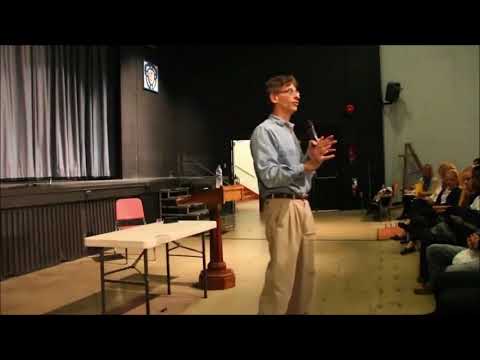
Alfie Kohn Videos

BOOKS
Feel-Bad Education: And Other Contrarian Essays on Children and Schooling
The Homework Myth: Why Our Kids Get Too Much of a Bad Thing
Beyond Discipline: From Compliance to Community
Unconditional Parenting: Moving from Rewards and Punishments to Love and Reason
What Does it Mean to Be Well Educated? And Other Essays on Standards, Grading, and Other Follies
FAQS
-
How do I book Alfie Kohn to speak at my event?
Our experienced booking agents have successfully helped clients around the world secure speakers like Alfie Kohn for speaking engagements, personal appearances, product endorsements, or corporate entertainment since 2002. Click the Check Schedule button above and complete the form on this page to check availability for Alfie Kohn, or call our office at 1.855.383.8805 to discuss your upcoming event. One of our experienced agents will be happy to help you get speaking fee information and check availability for Alfie Kohn or any other speaker of your choice. -
How much does it cost to book Alfie Kohn for a speaking engagement?
Speaking fees for Alfie Kohn, or any other speakers and celebrities, are determined based on a number of factors and may change without notice. The estimated fees to book Alfie Kohn are Below $10,000 for live events and Below $10,000 for virtual events. For the most current speaking fee to hire Alfie Kohn, click the Check Schedule button above and complete the form on this page, or call our office at 1.855.383.8805 to speak directly with an experienced booking agent. -
What topics does Alfie Kohn speak about?
Alfie Kohn is a keynote speaker and industry expert who speaks on a wide range of topics such as Business, Personal Growth, Author, Non-Fiction Authors, Inspirational, Family & Parenting, Health & Wellness, Nutrition, Science, Healthcare, Education, Motivational, Early Childhood Education, Thought Leadership, Disruptive Thinking, Education Reform, Marketing, Art & Design and Workshop. -
Where does Alfie Kohn travel from?
Alfie Kohn generally travels from Boston, MA, USA and can be booked for (private) corporate events, personal appearances, keynote speeches, or other performances. -
Who is the agent for Alfie Kohn?
AAE Speakers Bureau has successfully secured keynote speakers like Alfie Kohn for clients worldwide since 2002. As a full-service speaker booking agency, we have access to virtually any speaker or celebrity in the world. Our agents are happy and able to submit an offer to the speaker or celebrity of your choice, letting you benefit from our reputation and long-standing relationships in the industry. Please click the Check Schedule button above and complete the form on this page including the details of your event, or call our office at 1.855.383.8805, and one of our agents will assist you to book Alfie Kohn for your next private or corporate function. -
What is a full-service speaker booking agency?
AAE Speakers Bureau is a full-service speaker booking agency, meaning we can completely manage the speaker’s or celebrity’s engagement with your organization from the time of booking your speaker through the event’s completion. We provide all of the services you need to host Alfie Kohn or any other speaker of your choice, including offer negotiation, contractual assistance, accounting and billing, and event speaker travel and logistics services. When you book a speaker with us, we manage the process of hosting a speaker for you as an extension of your team. Our goal is to give our clients peace of mind and a best-in-class service experience when booking a speaker with us. -
Why is AAE Speakers Bureau different from other booking agencies?
If you’re looking for the best speaker recommendations, paired with a top-notch customer service experience, you’re in the right place. At AAE Speakers Bureau, we exclusively represent the interests of our clients - professional organizations, companies, universities, and associations. We intentionally do not represent the speakers we feature or book. That is so we can present our clients with the broadest and best performing set of speaker options in the market today, and we can make these recommendations without any obligation to promote a specific speaker over another. This is why when our agents suggest a speaker for your event, you can be assured that they are of the highest quality with a history of proven success with our other clients.
BOOK ALFIE KOHN
We are happy to assist you with your interest in booking a speaker or celebrity for your event, your organization, and the type of talent you would like to secure, and an agent will be in touch shortly.
Fill out the form below to or call us at 1.855.383.8805 if need immediate assistance.
We respond to most inquiries within 4 hours. Under special circumstances, it may take up to 24 hours.
We are happy to help! Call us to speak with a booking agent about your event or specific speaker request.

Gauge Interest and check availability for appearances, speaking engagements, or corporate events.
Provide you with speaking fee to book Alfie Kohn or other celebrity appearance fees
Give you personal recommendations for the best keynote speakers or celebrities
Assist you with any questions you have throughout the talent booking process


This website is a resource for event professionals and strives to provide the most comprehensive catalog of thought leaders and industry experts to consider for speaking engagements. A listing or profile on this website does not imply an agency affiliation or endorsement by the talent.
All American Entertainment (AAE) exclusively represents the interests of talent buyers, and does not claim to be the agency or management for any speaker or artist on this site. AAE is a talent booking agency for paid events only. We do not handle requests for donation of time or media requests for interviews, and cannot provide celebrity contact information.