Dr. Tali Sharot
Keynote Speaker: Cognitive Neuroscientist, Leading Expert on Human Decision-Making & Emotion; Award-Winning Author of "The Influential Mind" & "The Optimism Bias"
-
Travels From:
-
Speaking Fee:
-
Categories:
Dr. Tali Sharot Biography
Tali Sharot is a professor of cognitive neuroscience whose work integrates neuroscience, behavioral economics, and psychology. Sharot holds a professorship in the Department of Experimental Psychology and the Max Planck UCL Centre for Computational Psychiatry at University College London, and is also on the faculty of the Department of Brain and Cognitive Sciences at MIT. A graduate of New York University, she earned a master's in psychology and a doctorate in psychology and neuroscience. Before her academic career, Sharot worked in the financial industry, providing her research with a practical perspective.
Sharot is recognized for her research on the neural basis of emotion, decision making, and optimism. As director of the Affective Brain Lab, she leads research that combines neural imaging, pharmacological manipulation, and genetic principles to study human behavior and neurological mechanisms, with applications in addressing brain dysfunction. Her work in psychology, behavioral economics, and neuroscience explores the factors that shape decisions, beliefs, and expectations, and how these can be modified or maintained.
Sharot is the author of several books, including "The Optimism Bias: A Tour of the Irrationally Positive Brain," which examines why the brain tends to overestimate positive outcomes. In this book and a TIME cover story, she discusses findings from social science and neuroscience to illuminate the evolutionary roots of human hopefulness. Her book "The Influential Mind" analyzes how influence is most effective when aligned with the core elements that govern thought and emotion. "The Influential Mind" was selected as a best book of the year by Forbes, The Times, Huffington Post, Bloomberg, Greater Good Magazine, and Stanford Business School. Sharot also co-authored "Look Again: The Power of Noticing What Was Always There" with Cass R. Sunstein, exploring habituation and how awareness of this psychological adaptation can lead to a more examined life.
Sharot has received fellowships from the Wellcome Trust, the Forum of European Philosophy, and the British Academy, and won the British Psychological Society Book Award for both "The Optimism Bias" and "The Influential Mind." Her research has been published in journals such as Nature, Science, Nature Neuroscience, and Psychological Science.
Sharot's TED talks have accumulated more than 15 million views. She has written for The New York Times, Time, and The Washington Post, and has appeared on CNN, NBC, and MSNBC. Sharot has advised global companies and government projects, and her speaking audiences include Google, Microsoft, the European Parliament, NATO, Goldman Sachs, Prudential, and the World Economic Forum. She is known for explaining concepts in human behavior, decision science, and cognitive neuroscience in accessible ways, and for demonstrating how these insights can be applied in finance, marketing, health, and public policy.
Contact a speaker booking agent to check availability on Dr. Tali Sharot and other top speakers and celebrities.
Dr. Tali Sharot Speaking Topics
Part of our daily job is to affect others; we advise our clients, guide our patients, teach our children and inform our online followers. Yet, science shows we systematically fall on to suboptimal habits when trying to change others– from insisting the other is wrong to exerting control. Based on her award-winning book, The Influential Mind, internationally acclaimed behavioral neuroscientist, Tali Sharot, explains how an attempt to influence will be successful only if it is well-matched with the core elements that govern how we think and feel. Sharot explains why providing data and numbers alone can be a weak approach to influence and why emotions and narrative often have strong impact. By understanding the minds and brains of those around us, we become better at advising and communicating information.
Even stimulating jobs, breathtaking works of art, an exciting new gadget, lose their sparkle after a while. We desensitize to what is wonderful around us. We also stop noticing what is not-so-great: cracks in a relationship, a culture of fraud that developed slowly within a company or the gradual rise of misinformation. It is not that we are lazy or stupid. It is simply that our brain evolved to respond to what is new and different, not to things that are constant or change gradually. As a result, we stop noticing what is suboptimal and so fail to try and make changes. We also stop noticing what is good in our lives and so we don’t feel the joy. But what if we could ‘dishabituate’? Based on her new book Look Again, Sharot shares what psychology and biology tell us about why we stop noticing both the great and not-so-great things around us and how to regain sensitivity in the office, at home, online, and at the store, so we can enjoy what is good and change what’s not.
Making good decisions is key to the success of any company and a critical skill for leaders and investors. Yet, making wise choices, whether regarding finances, business or health, are difficult. We now know that human decision-making is rife with bias; from over-confidence to irrational optimism and future discounting. The good news is that understanding where people go wrong enables us to improve the decision-making process. Sharot occupies a unique spot at the intersection of behavioural economics, neuroscience and psychology. From this rare seat Sharot integrates up-to-date research in decision science and transforms this knowledge into practical insights. In this lively talk Sharot helps the audience identify systematic decision-making errors and offers creative and practical methods for corrections and improvement.
A major goal of managers and companies is to induce behavioral change. We want to influence the actions of our clients, employees and colleagues in positive ways. Sharot has advised some of the world largest companies, including Pepsi, Bank of America and Prudential, on how to do exactly that. In this engaging, thoughtful and humours presentation Sharot shares which factors – according to science – have the largest impact on peoples’ actions, and why. Using her own cutting-edge research she explains how we can use innate human tendencies to nudge people in the right direction, and which commonly used approaches often back-fire. The audience learn powerful practical applications for inducing change and gains a deeper understanding of human behaviour.
Change, uncertainty and unrest have taken a toll on people’s well-being. Stress, depression, and anxiety are on the rise, directly impacting our physical health and productivity. What can we do at the workplace and at home to improve the mental health of our colleagues, employees, and customers? What can we do to induce happiness? Sharot’s intriguing answers are based on research in neuroscience, behavioral economics and psychology. Sharot emphasizes the joy of anticipation and the pain of dread, the importance of having a sense of agency for well-being, and the perils of social comparison. She explains why our mind uses a ‘grayscale’ to perceive the world and how we might turn it off to see in color again.
Dr. Tali Sharot Videos
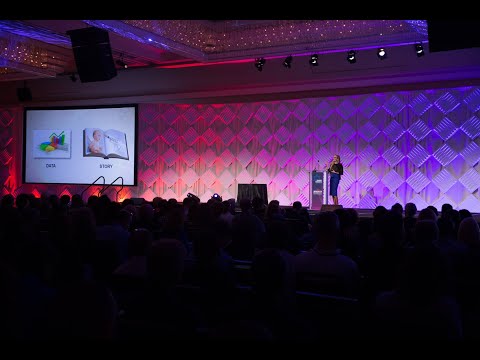


How do I book Dr. Tali Sharot to speak at my event?
Our experienced booking agents have successfully helped clients around the world secure speakers like Dr. Tali Sharot for speaking engagements, personal appearances, product endorsements, or corporate entertainment since 2002. Click the Check Schedule button above and complete the form on this page to check availability for Dr. Tali Sharot, or call our office at 1.855.383.8805 to discuss your upcoming event. One of our experienced agents will be happy to help you get speaking fee information and check availability for Dr. Tali Sharot or any other speaker of your choice.
How much does it cost to book Dr. Tali Sharot for a speaking engagement?
Speaking fees for Dr. Tali Sharot, or any other speakers and celebrities, are determined based on a number of factors and may change without notice. The estimated fees to book Dr. Tali Sharot are $20,000 - $30,000 for live events and $10,000 - $20,000 for virtual events. For the most current speaking fee to hire Dr. Tali Sharot, click the Check Schedule button above and complete the form on this page, or call our office at 1.855.383.8805 to speak directly with an experienced booking agent.
What topics does Dr. Tali Sharot speak about?
Dr. Tali Sharot is a keynote speaker and industry expert who speaks on a wide range of topics such as Technology, Author, Innovation, Ethics & Integrity, Science, Psychology, Social Sciences, Neuroscience, Non-Fiction Authors, Culture, Women in Tech, Education, Thought Leadership and Disruptive Thinking.
Where does Dr. Tali Sharot travel from?
Dr. Tali Sharot generally travels from Boston, MA, USA and can be booked for (private) corporate events, personal appearances, keynote speeches, or other performances.
Who is the agent for Dr. Tali Sharot?
AAE Speakers Bureau has successfully secured keynote speakers like Dr. Tali Sharot for clients worldwide since 2002. As a full-service speaker booking agency, we have access to virtually any speaker or celebrity in the world. Our agents are happy and able to submit an offer to the speaker or celebrity of your choice, letting you benefit from our reputation and long-standing relationships in the industry. Please click the Check Schedule button above and complete the form on this page including the details of your event, or call our office at 1.855.383.8805, and one of our agents will assist you to book Dr. Tali Sharot for your next private or corporate function.
What is a full-service speaker booking agency?
AAE Speakers Bureau is a full-service speaker booking agency, meaning we can completely manage the speaker’s or celebrity’s engagement with your organization from the time of booking your speaker through the event’s completion. We provide all of the services you need to host Dr. Tali Sharot or any other speaker of your choice, including offer negotiation, contractual assistance, accounting and billing, and event speaker travel and logistics services. When you book a speaker with us, we manage the process of hosting a speaker for you as an extension of your team. Our goal is to give our clients peace of mind and a best-in-class service experience when booking a speaker with us.
Why is AAE Speakers Bureau different from other booking agencies?
If you’re looking for the best speaker recommendations, paired with a top-notch customer service experience, you’re in the right place. At AAE Speakers Bureau, we exclusively represent the interests of our clients - professional organizations, companies, universities, and associations. We intentionally do not represent the speakers we feature or book. That is so we can present our clients with the broadest and best performing set of speaker options in the market today, and we can make these recommendations without any obligation to promote a specific speaker over another. This is why when our agents suggest a speaker for your event, you can be assured that they are of the highest quality with a history of proven success with our other clients.
Dr. Tali Sharot is a keynote speaker and industry expert who speaks on a wide range of topics including Technology, Author and Innovation. The estimated speaking fee range to book Dr. Tali Sharot for live events is $20,000 - $30,000, and for virtual events $10,000 - $20,000. Dr. Tali Sharot generally travels from Boston, MA, USA and can be booked for (private) corporate events, personal appearances, keynote speeches, or other performances. Similar motivational celebrity speakers are Shawn Achor, Lisa Bodell and Erica Dhawan. Contact All American Speakers for ratings, reviews, videos and information on scheduling Dr. Tali Sharot for an upcoming event.
SPEAKING TOPICS
Dr. Tali Sharot Speaking Topics
-
LEADING with INFLUENCE: Using Data, Emotion and Narrative
Part of our daily job is to affect others; we advise our clients, guide our patients, teach our children and inform our online followers. Yet, science shows we systematically fall on to suboptimal habits when trying to change others– from insisting the other is wrong to exerting control. Based on her award-winning book, The Influential Mind, internationally acclaimed behavioral neuroscientist, Tali Sharot, explains how an attempt to influence will be successful only if it is well-matched with the core elements that govern how we think and feel. Sharot explains why providing data and numbers alone can be a weak approach to influence and why emotions and narrative often have strong impact. By understanding the minds and brains of those around us, we become better at advising and communicating information.
-
LOOK AGAIN: How to Notice and Change
Even stimulating jobs, breathtaking works of art, an exciting new gadget, lose their sparkle after a while. We desensitize to what is wonderful around us. We also stop noticing what is not-so-great: cracks in a relationship, a culture of fraud that developed slowly within a company or the gradual rise of misinformation. It is not that we are lazy or stupid. It is simply that our brain evolved to respond to what is new and different, not to things that are constant or change gradually. As a result, we stop noticing what is suboptimal and so fail to try and make changes. We also stop noticing what is good in our lives and so we don’t feel the joy. But what if we could ‘dishabituate’? Based on her new book Look Again, Sharot shares what psychology and biology tell us about why we stop noticing both the great and not-so-great things around us and how to regain sensitivity in the office, at home, online, and at the store, so we can enjoy what is good and change what’s not.
-
WISE CHOICE: Making Better Decisions Using Behavioral Economics
Making good decisions is key to the success of any company and a critical skill for leaders and investors. Yet, making wise choices, whether regarding finances, business or health, are difficult. We now know that human decision-making is rife with bias; from over-confidence to irrational optimism and future discounting. The good news is that understanding where people go wrong enables us to improve the decision-making process. Sharot occupies a unique spot at the intersection of behavioural economics, neuroscience and psychology. From this rare seat Sharot integrates up-to-date research in decision science and transforms this knowledge into practical insights. In this lively talk Sharot helps the audience identify systematic decision-making errors and offers creative and practical methods for corrections and improvement.
-
BEHAVIORAL CHANGE: The Business of Moving Others
A major goal of managers and companies is to induce behavioral change. We want to influence the actions of our clients, employees and colleagues in positive ways. Sharot has advised some of the world largest companies, including Pepsi, Bank of America and Prudential, on how to do exactly that. In this engaging, thoughtful and humours presentation Sharot shares which factors – according to science – have the largest impact on peoples’ actions, and why. Using her own cutting-edge research she explains how we can use innate human tendencies to nudge people in the right direction, and which commonly used approaches often back-fire. The audience learn powerful practical applications for inducing change and gains a deeper understanding of human behaviour.
-
WELLBEING: Using Science to Improve Mental-Health
Change, uncertainty and unrest have taken a toll on people’s well-being. Stress, depression, and anxiety are on the rise, directly impacting our physical health and productivity. What can we do at the workplace and at home to improve the mental health of our colleagues, employees, and customers? What can we do to induce happiness? Sharot’s intriguing answers are based on research in neuroscience, behavioral economics and psychology. Sharot emphasizes the joy of anticipation and the pain of dread, the importance of having a sense of agency for well-being, and the perils of social comparison. She explains why our mind uses a ‘grayscale’ to perceive the world and how we might turn it off to see in color again.
VIDEO
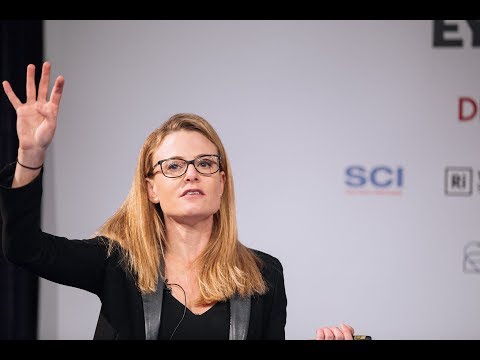
Dr. Tali Sharot Videos

BOOKS
REVIEWS
Dr. Tali Sharot Reviews
-
Everything went very well, especially considering the quick pivot to virtual. The team enjoyed Tali's keynote and breaking into groups to discuss the takeaways from her slides.
Johnson & Johnson Innovative Medicine - Feb 02 2026 -
Our attendees raved about Dr. Sharot's presentation!
The American Association of Cardiovascular and Pulmonary Rehabilitation (AACVPR) - Oct 09 2024 -
It all went well. Dr. Sharot did a great job – really terrific in front of the camera and lovely to work with – she came very prepared.
Wilson Dow Group o/b/o Genentech - Sep 19 2019
FAQS
-
How do I book Dr. Tali Sharot to speak at my event?
Our experienced booking agents have successfully helped clients around the world secure speakers like Dr. Tali Sharot for speaking engagements, personal appearances, product endorsements, or corporate entertainment since 2002. Click the Check Schedule button above and complete the form on this page to check availability for Dr. Tali Sharot, or call our office at 1.855.383.8805 to discuss your upcoming event. One of our experienced agents will be happy to help you get speaking fee information and check availability for Dr. Tali Sharot or any other speaker of your choice. -
How much does it cost to book Dr. Tali Sharot for a speaking engagement?
Speaking fees for Dr. Tali Sharot, or any other speakers and celebrities, are determined based on a number of factors and may change without notice. The estimated fees to book Dr. Tali Sharot are $20,000 - $30,000 for live events and $10,000 - $20,000 for virtual events. For the most current speaking fee to hire Dr. Tali Sharot, click the Check Schedule button above and complete the form on this page, or call our office at 1.855.383.8805 to speak directly with an experienced booking agent. -
What topics does Dr. Tali Sharot speak about?
Dr. Tali Sharot is a keynote speaker and industry expert who speaks on a wide range of topics such as Technology, Author, Innovation, Ethics & Integrity, Science, Psychology, Social Sciences, Neuroscience, Non-Fiction Authors, Culture, Women in Tech, Education, Thought Leadership and Disruptive Thinking. -
Where does Dr. Tali Sharot travel from?
Dr. Tali Sharot generally travels from Boston, MA, USA and can be booked for (private) corporate events, personal appearances, keynote speeches, or other performances. -
Who is the agent for Dr. Tali Sharot?
AAE Speakers Bureau has successfully secured keynote speakers like Dr. Tali Sharot for clients worldwide since 2002. As a full-service speaker booking agency, we have access to virtually any speaker or celebrity in the world. Our agents are happy and able to submit an offer to the speaker or celebrity of your choice, letting you benefit from our reputation and long-standing relationships in the industry. Please click the Check Schedule button above and complete the form on this page including the details of your event, or call our office at 1.855.383.8805, and one of our agents will assist you to book Dr. Tali Sharot for your next private or corporate function. -
What is a full-service speaker booking agency?
AAE Speakers Bureau is a full-service speaker booking agency, meaning we can completely manage the speaker’s or celebrity’s engagement with your organization from the time of booking your speaker through the event’s completion. We provide all of the services you need to host Dr. Tali Sharot or any other speaker of your choice, including offer negotiation, contractual assistance, accounting and billing, and event speaker travel and logistics services. When you book a speaker with us, we manage the process of hosting a speaker for you as an extension of your team. Our goal is to give our clients peace of mind and a best-in-class service experience when booking a speaker with us. -
Why is AAE Speakers Bureau different from other booking agencies?
If you’re looking for the best speaker recommendations, paired with a top-notch customer service experience, you’re in the right place. At AAE Speakers Bureau, we exclusively represent the interests of our clients - professional organizations, companies, universities, and associations. We intentionally do not represent the speakers we feature or book. That is so we can present our clients with the broadest and best performing set of speaker options in the market today, and we can make these recommendations without any obligation to promote a specific speaker over another. This is why when our agents suggest a speaker for your event, you can be assured that they are of the highest quality with a history of proven success with our other clients.
BOOK DR. TALI SHAROT
We are happy to assist you with your interest in booking a speaker or celebrity for your event, your organization, and the type of talent you would like to secure, and an agent will be in touch shortly.
Fill out the form below to or call us at 1.855.383.8805 if need immediate assistance.
We respond to most inquiries within 4 hours. Under special circumstances, it may take up to 24 hours.
We are happy to help! Call us to speak with a booking agent about your event or specific speaker request.
Gauge Interest and check availability for appearances, speaking engagements, or corporate events.
Provide you with speaking fee to book Dr. Tali Sharot or other celebrity appearance fees
Give you personal recommendations for the best keynote speakers or celebrities
Assist you with any questions you have throughout the talent booking process


This website is a resource for event professionals and strives to provide the most comprehensive catalog of thought leaders and industry experts to consider for speaking engagements. A listing or profile on this website does not imply an agency affiliation or endorsement by the talent.
All American Entertainment (AAE) exclusively represents the interests of talent buyers, and does not claim to be the agency or management for any speaker or artist on this site. AAE is a talent booking agency for paid events only. We do not handle requests for donation of time or media requests for interviews, and cannot provide celebrity contact information.