Curtis J. Bonk
Keynote Speaker: Curt Bonk is Professor at Indiana University and adjunct in the School of Informatics. He is also President of CourseShare
-
Travels From:
-
Speaking Fee:
-
Categories:
Curtis J. Bonk Biography
Curt is Professor of Instructional Systems Technology (Newer IST page) in the School of Education at Indiana University. Curt is affiliated with the cognitive sciences program and is adjunct in the School of Informatics at IU. He founded SurveyShare, Inc. in 2003 which he sold in 2010. In addition, he has been founder and president of CourseShare, LLC since 1999. Before coming to IU in 1992, Curt taught at West Virginia University for three years. In the early 1980s, he was a CPA and corporate controller in Wisconsin, while in the late 80s, he obtained his Master's and Ph.D. degrees in educational psychology from the University of Wisconsin-Madison (see his bio for more detailed information). Professor Bonk firmly believes in distance learning since he is a product of it. Dr. Bonk has been filmed in Dallas for a STARLINK program on blended learning, the Web 2.0, and best practices for teaching online. Curt is a popular conference speaker with several books in the area of emerging technologies for learning (see also Amazon author profile). He is currently conducting research in the field of self-directed open learning environments, online motivation, and Extreme Learning.
Contact a speaker booking agent to check availability on Curtis J. Bonk and other top speakers and celebrities.
Curtis J. Bonk Speaking Topics
For a half century, educators, psychologists, and researchers have been predicting that highly intensive, innovative, and individualized learning formats powered by intelligent agents and tutors are only a few years away. However, each year would arrive with the same lovely hopes and dreams and unfortunately depart with little fanfare. Fast forward to today where the endless decades of promises seem much more relevant and realistic today with the advent of generative AI technology such as DeepSeek, ChatGPT, Gemini, Claude, Copilot, Perplexity, etc.
Today, the learner, guided by generative AI, is seeking out learning experiences (e.g., engaging in different levels of simulated experiences, beginning to learn a new language, learning to write poetry or musical lyrics, etc.), instead of being forced down preset paths with predetermined outcomes. The learner is increasingly self-directed and the learning environment is learner-determined, lifelong, and individualized. What the human race needs to do is design guidelines, specific training experiences, and novel assessments for this self-directed lifelong learning world. It may be hard to believe, but AI-enhanced self-directed lifelong learning is here and with it so too are new opportunities for every learner on this planet.
The pervasive boredom of rote learning seen in Education 1.0 yielded to a more learner-centered age of Education 2.0 a few decades ago. Today instructors are confronted with the possibilities and dilemmas of Education 3.0. But now with climate change, economic unrest, the rise of robotics and AI, world population shifts, and so on, the innovation age of Education 4.0 is coming and Education 5.0 right after that. This is the age where learning is more informal, resource-rich, and self-directed and where learner creation of products is the new norm, often with the use of digital media.
During the past few years, learning has become increasingly collaborative, global, mobile, flipped, modifiable, open, online, blended, massive, visually-based, hands-on, ubiquitous, instantaneous, on-demand, adaptive, and personal. We are living in an age of educational resource abundance where passion, play, purpose, and freedom to learn to take precedence over the traditional information reception models of learning. The best instructors and experts today are most effective as curators, counselors, consultants, concierges, and cultivators of our learning. And now they can appear instantaneously on a mobile device. That is a sign that Education 4.0 is not far away. New instructor roles require a unique and evolving set of guiding principles.
Professor Bonk will detail a set of 20 “last” principles of instruction with his “Learning Activation System Template” (LAST) including the Principle of Flexibility, the Principle of Meaningful Learning, the Principle of Choice and Options, the Principle of Cheerfulness and Optimism, the Principle of Spontaneity, the Principle of High Expectations, the Principle of Nontraditional Learning, etc. Suffice to say, there is immense change around the world today related to new forms of learning typically involving technology.
In fact, there are three megatrends related to learning technology today: (1) technologies for engagement; (2) technologies for pervasive access; and (3) technologies for the personalization and customization of learning. To better understand these new forms of learning delivery.
Open, online, and distance learning have always relied on a large percent of learners to self-direct their own learning. Online and blended learning forms of learning often put learners in the driver’s seat, but many were not ready and instructors did not know how to effectively foster SDL.
During the past two decades, the emergence of open and digital textbooks, open educational resources (OER), and massive open online courses (MOOCs) made self-directed learning (SDL) became more prominent, essential, and celebrated. And, then suddenly, the pandemic happened. As would be expected when in a pandemic, the percent of people engaging in self-directed learning pursuits multiplied.
In response, Professor Curt Bonk conducted a series of studies at Indiana University related to SDL in technology-rich learning environments such as research on Duolingo and generative AI technology like ChatGPT. Implications for instructional designers and educators will be discussed, including instructional design guidelines and a checklist for fostering strategies found to be beneficial for self-directing one’s learning.
Change is inevitable. Technology change is pervasive; especially in the age of ChatGPT. Yesterday's technologies wiped entire industries and occupations. Today's technologies are accelerating these changes, and are, in particular, transforming the field of education. Learning is definitely changing. There is now a pervasive need for innovations in how we teach and how we learn. In response, Professor Bonk will detail a set of 20 "last" principles of instruction including the Principle of Flexibility, the Principle of Meaningful Learning, the Principle of Choice and Options, the Principle of Spontaneity, and the Principle of High Expectations. He will also highlight new roles for instructors in light of these principles.
Next, he will discuss these in light of three megatrends related to learning technology today: (1) the technologies for engagement; (2) the technologies for pervasive access; and (3) the technologies for the personalization and customization of learning. He will also take a moment to gaze into the future of learning as each of these megatrends evolve.
In the third decade of the 21st century, learning has become increasingly flipped, social, collaborative, global, game-like, mobile, modifiable, open, online, visually-based, hands-on, ubiquitous, personal, and much much more. Without a doubt, ChatGPT and other Generative AI platforms have richly expanded and dramatically transformed all these forms of learning. Is this an evolution or a revolution?
The launching of ChatGPT in November 2022 also launched countless conversations about how it and other Generative AI tools and platforms might transform teaching and learning in higher education. With each passing month since then, instructors and instructional designers in higher education institutions and organizations around the world have continued to experiment with Generative AI for innovative pedagogy. Now is the time to compile, compare, and categorize some of their instructional ideas and methods.
In Part 1 of this series of AI pedagogy in higher education talks, Curt Bonk presented dozens of ways of utilizing ChatGPT and other generative AI platforms and tools in one’s instruction while situating their use in two of his widely used psychological frameworks, TEC-VARIETY and R2D2.
In building on that session, in Part 2, Curt showcased additional ways educators are utilizing AI to reflect on and improve their teaching. In particular, he featured dozens of unique activities designed to foster critical and creative thinking as well as learner collaboration and motivation.
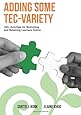
Adding Some TEC-VARIETY: 100+ Activities for Motivating and Retaining Learners Online
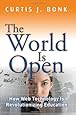
The World Is Open: How Web Technology Is Revolutionizing Education
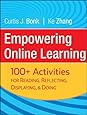
Empowering Online Learning: 100+ Activities for Reading, Reflecting, Displaying, and Doing
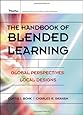
The Handbook of Blended Learning: Global Perspectives, Local Designs
How do I book Curtis J. Bonk to speak at my event?
Our experienced booking agents have successfully helped clients around the world secure speakers like Curtis J. Bonk for speaking engagements, personal appearances, product endorsements, or corporate entertainment since 2002. Click the Check Schedule button above and complete the form on this page to check availability for Curtis J. Bonk, or call our office at 1.800.698.2536 to discuss your upcoming event. One of our experienced agents will be happy to help you get speaking fee information and check availability for Curtis J. Bonk or any other speaker of your choice.
How much does it cost to book Curtis J. Bonk for a speaking engagement?
Speaking fees for Curtis J. Bonk, or any other speakers and celebrities, are determined based on a number of factors and may change without notice. The estimated fee for a live event is Below $10,000. For the most current speaking fee to hire Curtis J. Bonk, click the Check Schedule button above and complete the form on this page, or call our office at 1.800.698.2536 to speak directly with an experienced booking agent.
What topics does Curtis J. Bonk speak about?
Curtis J. Bonk is a keynote speaker and industry expert who speaks on a wide range of topics such as Professors, Technology, Education, Artificial Intelligence and Futurism.
Where does Curtis J. Bonk travel from?
Curtis J. Bonk generally travels from Bloomington, IN, USA and can be booked for (private) corporate events, personal appearances, keynote speeches, or other performances.
Who is the agent for Curtis J. Bonk?
AAE Speakers Bureau has successfully secured keynote speakers like Curtis J. Bonk for clients worldwide since 2002. As a full-service speaker booking agency, we have access to virtually any speaker or celebrity in the world. Our agents are happy and able to submit an offer to the speaker or celebrity of your choice, letting you benefit from our reputation and long-standing relationships in the industry. Please click the Check Schedule button above and complete the form on this page including the details of your event, or call our office at 1.800.698.2536, and one of our agents will assist you to book Curtis J. Bonk for your next private or corporate function.
What is a full-service speaker booking agency?
AAE Speakers Bureau is a full-service speaker booking agency, meaning we can completely manage the speaker’s or celebrity’s engagement with your organization from the time of booking your speaker through the event’s completion. We provide all of the services you need to host Curtis J. Bonk or any other speaker of your choice, including offer negotiation, contractual assistance, accounting and billing, and event speaker travel and logistics services. When you book a speaker with us, we manage the process of hosting a speaker for you as an extension of your team. Our goal is to give our clients peace of mind and a best-in-class service experience when booking a speaker with us.
Why is AAE Speakers Bureau different from other booking agencies?
If you’re looking for the best speaker recommendations, paired with a top-notch customer service experience, you’re in the right place. At AAE Speakers Bureau, we exclusively represent the interests of our clients - professional organizations, companies, universities, and associations. We intentionally do not represent the speakers we feature or book. That is so we can present our clients with the broadest and best performing set of speaker options in the market today, and we can make these recommendations without any obligation to promote a specific speaker over another. This is why when our agents suggest a speaker for your event, you can be assured that they are of the highest quality with a history of proven success with our other clients.
Curtis J. Bonk is a keynote speaker and industry expert who speaks on a wide range of topics including Professors, Technology and Education. The estimated speaking fee range to book Curtis J. Bonk for live events is Below $10,000. Please contact us for virtual event fees. Curtis J. Bonk generally travels from Bloomington, IN, USA and can be booked for (private) corporate events, personal appearances, keynote speeches, or other performances. Similar motivational celebrity speakers are Jamie Lee Curtis, Malte Jung and Brooks Atwood. Contact All American Speakers for ratings, reviews, videos and information on scheduling Curtis J. Bonk for an upcoming event.
SPEAKING TOPICS
Curtis J. Bonk Speaking Topics
-
Can You Believe It?: AI-Enhanced Self-Directed Lifelong Learning is Here!
For a half century, educators, psychologists, and researchers have been predicting that highly intensive, innovative, and individualized learning formats powered by intelligent agents and tutors are only a few years away. However, each year would arrive with the same lovely hopes and dreams and unfortunately depart with little fanfare. Fast forward to today where the endless decades of promises seem much more relevant and realistic today with the advent of generative AI technology such as DeepSeek, ChatGPT, Gemini, Claude, Copilot, Perplexity, etc.
Today, the learner, guided by generative AI, is seeking out learning experiences (e.g., engaging in different levels of simulated experiences, beginning to learn a new language, learning to write poetry or musical lyrics, etc.), instead of being forced down preset paths with predetermined outcomes. The learner is increasingly self-directed and the learning environment is learner-determined, lifelong, and individualized. What the human race needs to do is design guidelines, specific training experiences, and novel assessments for this self-directed lifelong learning world. It may be hard to believe, but AI-enhanced self-directed lifelong learning is here and with it so too are new opportunities for every learner on this planet.
-
Education 20/20 meets Education 5.0: Visions of Our Changing Learning World!
The pervasive boredom of rote learning seen in Education 1.0 yielded to a more learner-centered age of Education 2.0 a few decades ago. Today instructors are confronted with the possibilities and dilemmas of Education 3.0. But now with climate change, economic unrest, the rise of robotics and AI, world population shifts, and so on, the innovation age of Education 4.0 is coming and Education 5.0 right after that. This is the age where learning is more informal, resource-rich, and self-directed and where learner creation of products is the new norm, often with the use of digital media.
During the past few years, learning has become increasingly collaborative, global, mobile, flipped, modifiable, open, online, blended, massive, visually-based, hands-on, ubiquitous, instantaneous, on-demand, adaptive, and personal. We are living in an age of educational resource abundance where passion, play, purpose, and freedom to learn to take precedence over the traditional information reception models of learning. The best instructors and experts today are most effective as curators, counselors, consultants, concierges, and cultivators of our learning. And now they can appear instantaneously on a mobile device. That is a sign that Education 4.0 is not far away. New instructor roles require a unique and evolving set of guiding principles.
Professor Bonk will detail a set of 20 “last” principles of instruction with his “Learning Activation System Template” (LAST) including the Principle of Flexibility, the Principle of Meaningful Learning, the Principle of Choice and Options, the Principle of Cheerfulness and Optimism, the Principle of Spontaneity, the Principle of High Expectations, the Principle of Nontraditional Learning, etc. Suffice to say, there is immense change around the world today related to new forms of learning typically involving technology.
In fact, there are three megatrends related to learning technology today: (1) technologies for engagement; (2) technologies for pervasive access; and (3) technologies for the personalization and customization of learning. To better understand these new forms of learning delivery.
-
Self-Direct to Learn, Self-Direct to Live
Open, online, and distance learning have always relied on a large percent of learners to self-direct their own learning. Online and blended learning forms of learning often put learners in the driver’s seat, but many were not ready and instructors did not know how to effectively foster SDL.
During the past two decades, the emergence of open and digital textbooks, open educational resources (OER), and massive open online courses (MOOCs) made self-directed learning (SDL) became more prominent, essential, and celebrated. And, then suddenly, the pandemic happened. As would be expected when in a pandemic, the percent of people engaging in self-directed learning pursuits multiplied.
In response, Professor Curt Bonk conducted a series of studies at Indiana University related to SDL in technology-rich learning environments such as research on Duolingo and generative AI technology like ChatGPT. Implications for instructional designers and educators will be discussed, including instructional design guidelines and a checklist for fostering strategies found to be beneficial for self-directing one’s learning.
-
Technology Today, Technology Tomorrow: Might Learning Evolutions lead to Learning Revolutions?
Change is inevitable. Technology change is pervasive; especially in the age of ChatGPT. Yesterday's technologies wiped entire industries and occupations. Today's technologies are accelerating these changes, and are, in particular, transforming the field of education. Learning is definitely changing. There is now a pervasive need for innovations in how we teach and how we learn. In response, Professor Bonk will detail a set of 20 "last" principles of instruction including the Principle of Flexibility, the Principle of Meaningful Learning, the Principle of Choice and Options, the Principle of Spontaneity, and the Principle of High Expectations. He will also highlight new roles for instructors in light of these principles.
Next, he will discuss these in light of three megatrends related to learning technology today: (1) the technologies for engagement; (2) the technologies for pervasive access; and (3) the technologies for the personalization and customization of learning. He will also take a moment to gaze into the future of learning as each of these megatrends evolve.
In the third decade of the 21st century, learning has become increasingly flipped, social, collaborative, global, game-like, mobile, modifiable, open, online, visually-based, hands-on, ubiquitous, personal, and much much more. Without a doubt, ChatGPT and other Generative AI platforms have richly expanded and dramatically transformed all these forms of learning. Is this an evolution or a revolution?
-
How Educators Can Harness Generative AI for Enhanced Learning
The launching of ChatGPT in November 2022 also launched countless conversations about how it and other Generative AI tools and platforms might transform teaching and learning in higher education. With each passing month since then, instructors and instructional designers in higher education institutions and organizations around the world have continued to experiment with Generative AI for innovative pedagogy. Now is the time to compile, compare, and categorize some of their instructional ideas and methods.
In Part 1 of this series of AI pedagogy in higher education talks, Curt Bonk presented dozens of ways of utilizing ChatGPT and other generative AI platforms and tools in one’s instruction while situating their use in two of his widely used psychological frameworks, TEC-VARIETY and R2D2.
In building on that session, in Part 2, Curt showcased additional ways educators are utilizing AI to reflect on and improve their teaching. In particular, he featured dozens of unique activities designed to foster critical and creative thinking as well as learner collaboration and motivation.
BOOKS
Adding Some TEC-VARIETY: 100+ Activities for Motivating and Retaining Learners Online
The World Is Open: How Web Technology Is Revolutionizing Education
Empowering Online Learning: 100+ Activities for Reading, Reflecting, Displaying, and Doing
The Handbook of Blended Learning: Global Perspectives, Local Designs
FAQS
-
How do I book Curtis J. Bonk to speak at my event?
Our experienced booking agents have successfully helped clients around the world secure speakers like Curtis J. Bonk for speaking engagements, personal appearances, product endorsements, or corporate entertainment since 2002. Click the Check Schedule button above and complete the form on this page to check availability for Curtis J. Bonk, or call our office at 1.800.698.2536 to discuss your upcoming event. One of our experienced agents will be happy to help you get speaking fee information and check availability for Curtis J. Bonk or any other speaker of your choice. -
How much does it cost to book Curtis J. Bonk for a speaking engagement?
Speaking fees for Curtis J. Bonk, or any other speakers and celebrities, are determined based on a number of factors and may change without notice. The estimated fee for a live event is Below $10,000. For the most current speaking fee to hire Curtis J. Bonk, click the Check Schedule button above and complete the form on this page, or call our office at 1.800.698.2536 to speak directly with an experienced booking agent. -
What topics does Curtis J. Bonk speak about?
Curtis J. Bonk is a keynote speaker and industry expert who speaks on a wide range of topics such as Professors, Technology, Education, Artificial Intelligence and Futurism. -
Where does Curtis J. Bonk travel from?
Curtis J. Bonk generally travels from Bloomington, IN, USA and can be booked for (private) corporate events, personal appearances, keynote speeches, or other performances. -
Who is the agent for Curtis J. Bonk?
AAE Speakers Bureau has successfully secured keynote speakers like Curtis J. Bonk for clients worldwide since 2002. As a full-service speaker booking agency, we have access to virtually any speaker or celebrity in the world. Our agents are happy and able to submit an offer to the speaker or celebrity of your choice, letting you benefit from our reputation and long-standing relationships in the industry. Please click the Check Schedule button above and complete the form on this page including the details of your event, or call our office at 1.800.698.2536, and one of our agents will assist you to book Curtis J. Bonk for your next private or corporate function. -
What is a full-service speaker booking agency?
AAE Speakers Bureau is a full-service speaker booking agency, meaning we can completely manage the speaker’s or celebrity’s engagement with your organization from the time of booking your speaker through the event’s completion. We provide all of the services you need to host Curtis J. Bonk or any other speaker of your choice, including offer negotiation, contractual assistance, accounting and billing, and event speaker travel and logistics services. When you book a speaker with us, we manage the process of hosting a speaker for you as an extension of your team. Our goal is to give our clients peace of mind and a best-in-class service experience when booking a speaker with us. -
Why is AAE Speakers Bureau different from other booking agencies?
If you’re looking for the best speaker recommendations, paired with a top-notch customer service experience, you’re in the right place. At AAE Speakers Bureau, we exclusively represent the interests of our clients - professional organizations, companies, universities, and associations. We intentionally do not represent the speakers we feature or book. That is so we can present our clients with the broadest and best performing set of speaker options in the market today, and we can make these recommendations without any obligation to promote a specific speaker over another. This is why when our agents suggest a speaker for your event, you can be assured that they are of the highest quality with a history of proven success with our other clients.
BOOK CURTIS J. BONK
We are happy to assist you with your interest in booking a speaker or celebrity for your event, your organization, and the type of talent you would like to secure, and an agent will be in touch shortly.
Fill out the form below to or call us at 1-800-698-2536 if need immediate assistance.
We respond to most inquiries within 4 hours. Under special circumstances, it may take up to 24 hours.
We are happy to help! Call us to speak with a booking agent about your event or specific speaker request.

Gauge Interest and check availability for appearances, speaking engagements, or corporate events.
Provide you with speaking fee to book Curtis J. Bonk or other celebrity appearance fees
Give you personal recommendations for the best keynote speakers or celebrities
Assist you with any questions you have throughout the talent booking process


This website is a resource for event professionals and strives to provide the most comprehensive catalog of thought leaders and industry experts to consider for speaking engagements. A listing or profile on this website does not imply an agency affiliation or endorsement by the talent.
All American Entertainment (AAE) exclusively represents the interests of talent buyers, and does not claim to be the agency or management for any speaker or artist on this site. AAE is a talent booking agency for paid events only. We do not handle requests for donation of time or media requests for interviews, and cannot provide celebrity contact information.